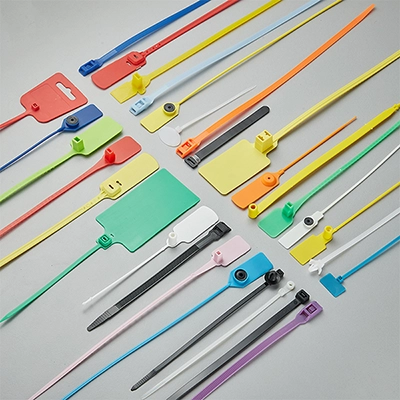
When a typhoon warning is issued, cable ties are often one of the first small tools reached for — shop owners use them to secure loose wiring and outdoor fixtures before the wind picks up. Factories, property management teams, and construction sites go through a similar routine, securing loose wiring, checking temporary installations, and fastening anything that could become unstable in strong winds.
Once the storm has passed, another round of work begins: clearing debris, restoring damaged equipment, re-routing cables, and getting systems back into operation.
These tasks may seem unrelated, but they share the same basic need — fast, reliable fastening and effective cable management.
Cable ties are not the main defense against a typhoon, nor are they a replacement for professional reinforcement. However, because they are quick to install, easy to carry, and practical in many situations, they often play an important supporting role before and after severe weather.
Before the Typhoon: Secure Early to Prevent Bigger Problems
During a typhoon, the biggest challenge is not only the wind itself, but also the repeated movement and pulling force it creates.
A cable, cover, or fixture that appears secure under normal conditions may start to swing, rub, or loosen when exposed to continuous strong winds. Taking care of these details before a storm arrives can help reduce unnecessary damage and make recovery work easier afterward.
Outdoor Cabling: Reducing Movement and Wear
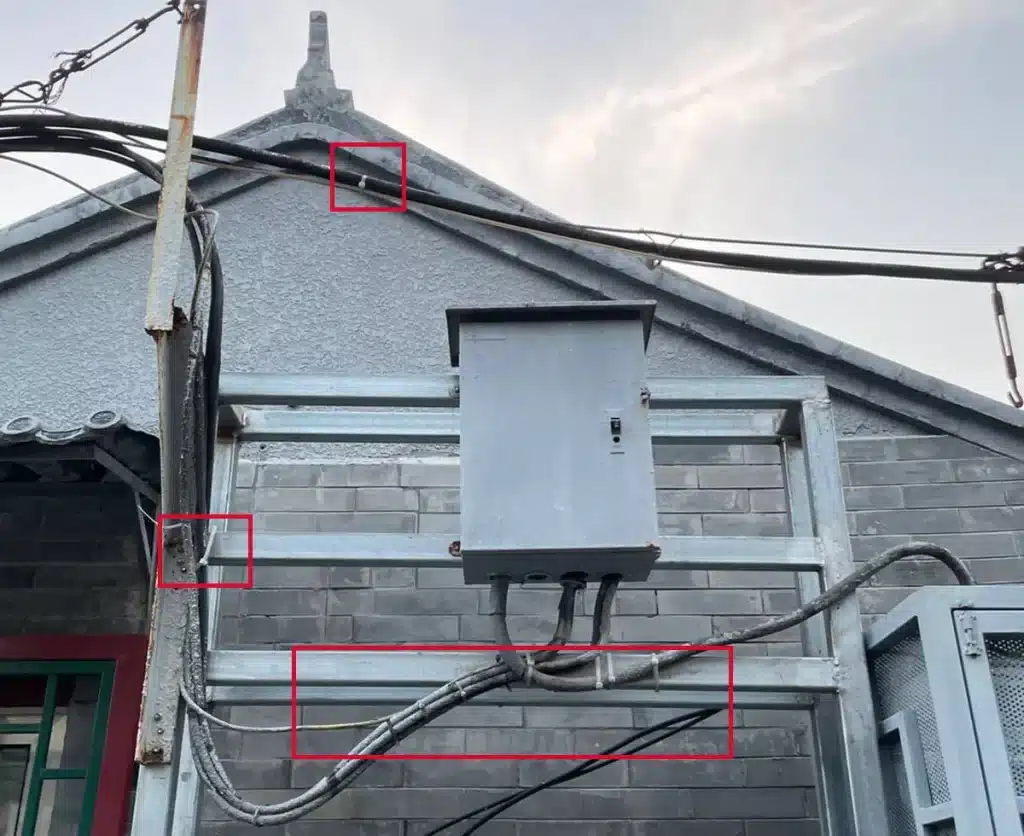
Before a typhoon approaches, it is important to check outdoor cables such as:
- CCTV cables;
- communication cables;
- wiring around outdoor air-conditioning units;
- temporary power cables.
These cables may not be heavy, and they may remain stable during normal weather. However, strong winds can cause them to move repeatedly. Over time, this movement may lead to friction against walls or brackets, damage to insulation, or additional stress on connection points.
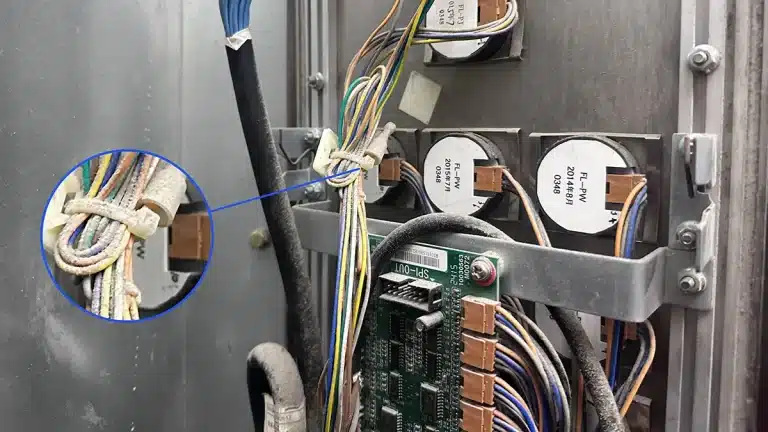
Using cable ties to organize cables along a proper route helps keep them in position and reduces unnecessary movement.
For exposed outdoor applications, selecting a slightly stronger specification can provide an additional safety margin. Depending on the cable size and installation conditions, medium-width cable ties such as 3.6mm or 4.8mm are often more suitable than smaller everyday options.
Temporary Fixtures and Equipment: Width Matters More Than Length
Factories, warehouses, and construction sites often have temporary cables, protective covers, and other items that require inspection before a typhoon.
In these situations, a cable tie not only holds the weight of the attached item. It is also exposed to the repeated pulling force created by wind movement.
This is why choosing a cable tie based only on length is not enough.
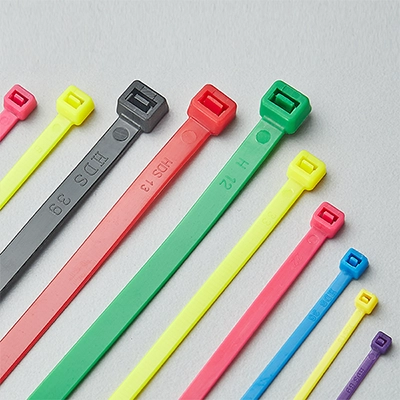
- Narrow cable ties are suitable for organizing smaller cable bundles.
- Medium-width cable ties work better for larger wiring systems and equipment-related applications.
- Wider cable ties are more suitable where higher tensile strength is required.
The right choice depends on the size of the item being secured, the force it may experience, and how many fastening points are used.
Tarps and Covers: Spread the Load Instead of Relying on One Point
Before a typhoon, factories and outdoor storage areas often use tarps to protect equipment and materials.
Cable ties can be used to:
- secure tarp edges;
- fasten through grommet points;
- connect covers to temporary frames.
However, it is important to remember that cable ties are auxiliary fastening tools, not structural supports.
If a large cover is held by only a few fastening points, wind force becomes concentrated in those areas, increasing the risk of damage.
A better approach is to add more fastening points and distribute the load more evenly, while selecting a suitable cable tie size according to the application.
After the Typhoon: Fast Fixes That Keep Recovery Moving
After a typhoon, many sites need quick solutions before permanent repairs can be completed.
At this stage, the goal is often not to restore everything immediately, but to prevent further damage and keep equipment and systems operating safely. This is where cable ties often become useful again.
Power and Telecom Line Repairs
Restoring power and communication lines requires speed and efficiency.
During repair work, technicians not only reconnect and test cables but also need to reorganize loose sections, manage cable routing, and reduce unnecessary stress on connection points.
Cable ties are widely used in these situations because they are compact, easy to carry, and require no additional tools for installation.
Temporary Fixes for Loose or Shifted Fixtures
After severe weather, outdoor fixtures may become loose, shifted, or partially detached.
Before formal repairs can be carried out, temporary stabilization is often needed to prevent the situation from getting worse.
Because cable ties can be installed quickly and replaced easily, they are suitable for many short-term fastening and organizing tasks during recovery work.
Choosing the Right Cable Tie for Typhoon Conditions
In typhoon-related applications, the key consideration is not only whether a cable tie can hold an item in place, but whether it can withstand repeated pulling forces.
Wind does not create a fixed load. Instead, it creates a continuous back-and-forth force that is very different from a simple static weight.
Therefore, cable tie selection should consider several factors:
- width;
- tensile strength;
- material;
- number of fastening points;
- actual installation conditions.
Generally, wider cable ties can withstand higher pulling forces, but the largest size is not always the best choice. The right specification depends on the real requirements of the application.
Material selection also matters.
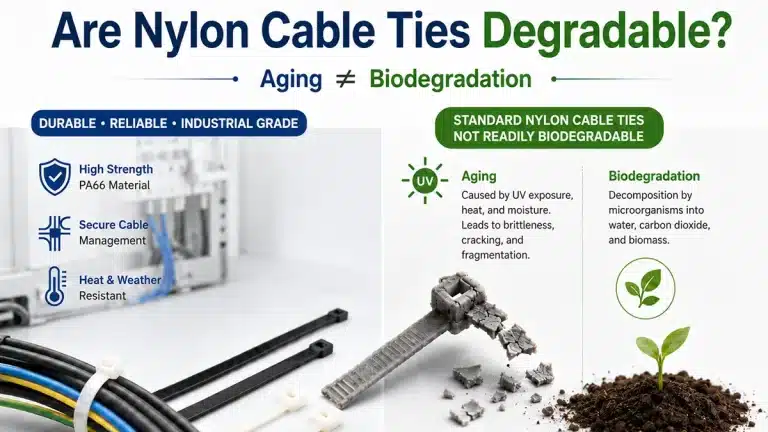
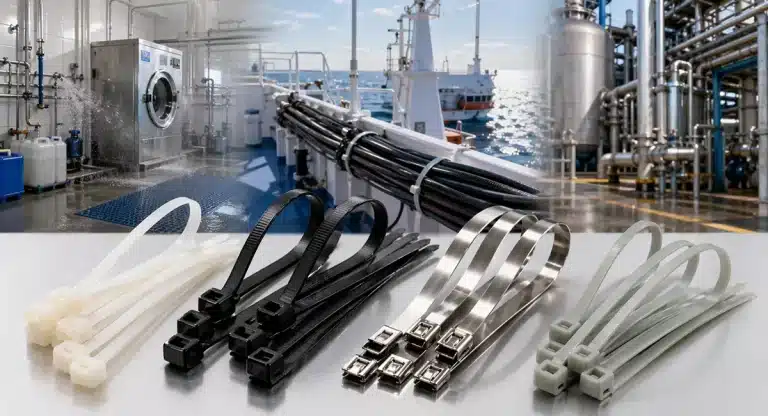
PA66 nylon cable ties are one of the most widely used options because they provide a good balance of strength and overall performance.
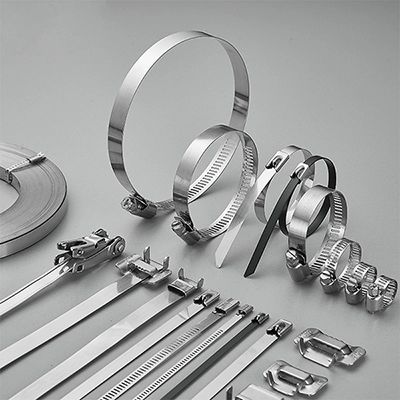
For applications requiring higher mechanical strength or more demanding conditions, stainless steel cable ties can provide additional reliability.
There is no single “best” cable tie material — the best choice is the one that matches the environment and application.
Small Ties, Real Impact
Typhoon damage can range from minor issues to major destruction.
At the serious end — such as fallen signs, damaged structures, or uprooted trees — professional reinforcement and repair solutions are required. A cable tie is not designed to replace those measures.
However, alongside these larger problems, many smaller issues are easy to overlook:
- a cable swinging loose in strong winds;
- a cover that has worked itself free;
- a fixture that needs temporary stabilization.
If left unattended, these small problems can slow down equipment recovery and make later repairs more complicated.
In many cases, taking care of these details early is what helps keep recovery work moving smoothly.
At HUADA Plastic, we have spent over two decades focused on the research and manufacturing of nylon cable ties. We understand that a product may look simple on the surface, but reliable fastening depends on careful choices in material, sizing, and construction.