A Simple Introduction to Automatic Cable Tie Packaging Machines
After nylon cable ties are produced, they still need to be packed before they can be boxed and shipped. An automatic cable tie packaging machine handles this part of the process — counting, bagging, sealing, and outputting finished packs.
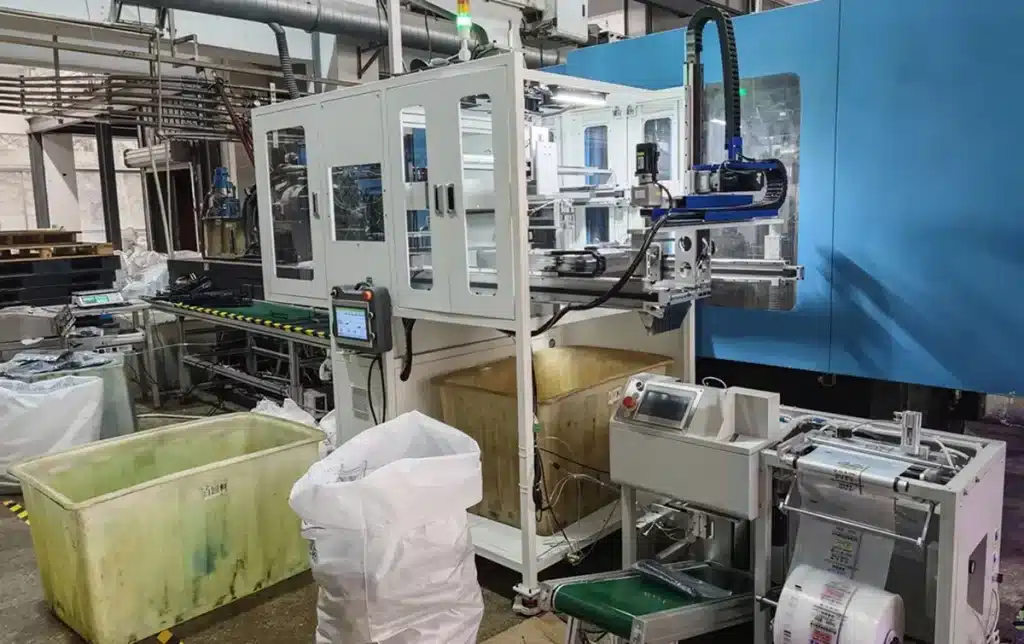
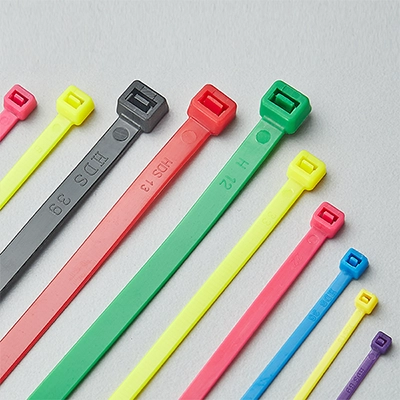
In some cable tie factories, standard nylon cable ties go through automatic packaging equipment. The machine runs based on a preset quantity, such as 100 or 250 pieces per bag. Once the cable ties enter the packaging area, they are placed into bags, sealed, and transferred to the next step for inspection or carton packing.
Compared with manual packing, this method is better suited for large-volume orders with stable and consistent specifications.
Where Is an Automatic Cable Tie Packaging Machine Used?
Nylon cable ties are typically produced by injection molding machines. After coming out of the mold, they go through picking, separating, and sorting before moving on to the packaging section.
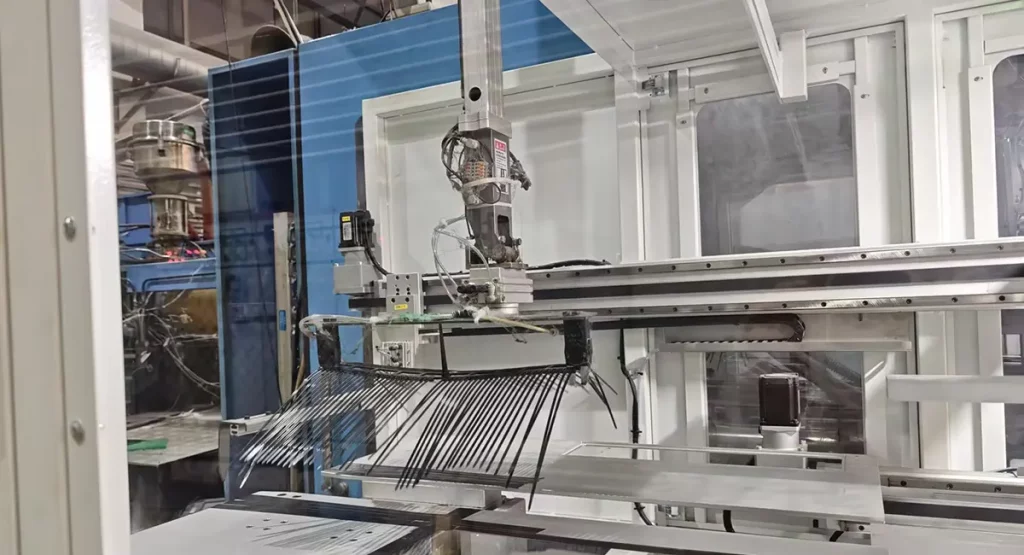
In some production lines, robotic arms work alongside injection molding machines — picking cable ties from the mold area and transferring them to the next position. In other setups, cable ties may reach the packaging machine through a conveyor belt or by manual feeding.
Either way, the automatic packaging machine comes into play after molding is done. It counts the cable ties according to the preset quantity, transfers them into the packaging bag, and completes heat sealing and finished bag output. Some systems also include a moisture-conditioning step before sealing, depending on product requirements.
Equipment layouts vary between manufacturers. Some automatic packaging systems are fully connected with injection molding machines, robotic arms, and conveyors. Others are used only for the back-end packaging stage. The structure may differ, but the core function is the same: counting, bagging, and sealing nylon cable ties continuously and consistently.
What Is the Difference Between Automatic and Manual Packing?
Manual packing still has a clear role in production. Its main advantage is flexibility, and it makes it easier to catch visible product issues during the packing process.
When workers handle sorting, counting, and bagging by hand, they naturally inspect the cable ties as they go. Visible defects such as incomplete molding, deformation, burrs, color variation, or broken teeth can often be spotted before the products reach the bag. In this sense, manual packing effectively adds an extra layer of appearance checking. This makes it especially well-suited for small-volume orders, mixed specifications, or orders with particular packaging requirements.
Automatic packing, on the other hand, is built for efficiency and consistency. For large quantities of cable ties with stable specifications — common lengths from 100mm to 500mm, for example — the machine can run continuously at a steady pace, cutting down on the repetitive work of counting, bagging, and sealing by hand.
In practice, most cable tie manufacturers choose their packing method based on the order at hand. High-volume, standard-specification orders are a natural fit for automatic packing. Orders with frequent specification changes, special packaging requirements, or stricter appearance checks may still call for manual packing. In many factories, both methods are used side by side.
What Should Be Considered When Using an Automatic Cable Tie Packaging Machine?
Automatic packaging machines are built for continuous operation, but they do require ongoing attention.
Because the machine runs at speed, small issues can affect the result. If the packaging film doesn’t open fully, or if cable ties enter the bag at the wrong angle, some pieces may not land properly inside. This can lead to packs with missing pieces, incorrect counts, or cable ties caught in the sealing area.
It’s also worth noting that automatic packing doesn’t involve touching or inspecting each cable tie individually. If the front-end sorting process isn’t well controlled, cable ties with visible defects — short molding, deformation, burrs, or broken teeth — may slip through alongside normal products. Small scraps, material residues, or dust from the production area can also find their way into the bag.
Running an automatic packaging machine doesn’t mean the process can be left on its own. Workers still need to check in regularly: whether the bag is opening correctly, whether the count is stable, whether the seal is complete, and whether there are any missing pieces or foreign materials inside.
Automatic packing improves packaging efficiency, but product sorting, workshop cleanliness, and regular inspection remain just as important. The machine handles the counting, bagging, and sealing — workers are responsible for catching problems, adjusting the equipment, and confirming the final result.
Conclusion
An automatic cable tie packaging machine is a back-end device used in nylon cable tie production. It handles counting, feeding, bagging, sealing, and finished pack output — and works best for standardized, large-volume runs where consistent packaging is important.
That said, automatic packing doesn’t eliminate the need for hands-on management. Whether the bag opens properly, whether the cable ties feed in smoothly, whether the count stays accurate, and whether any defects or foreign materials have mixed in — these all need regular attention from workers on the floor.
For a cable tie manufacturer, choosing the right packaging approach isn’t just about whether the equipment is automatic or manual. It depends on order volume, product specifications, packaging requirements, and how quality is controlled along the way. A well-matched packaging process helps keep things running smoothly from production all the way through to final shipment.