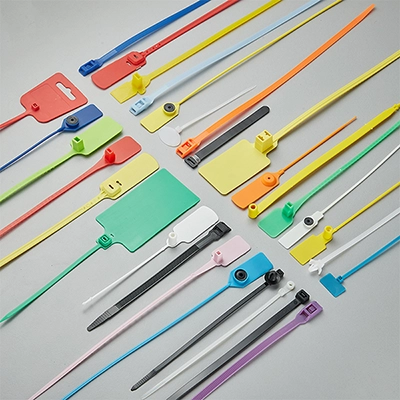
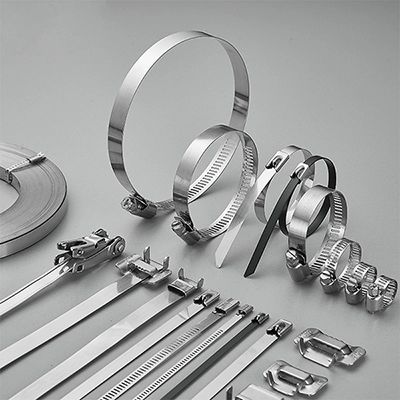
Most people playing a claw machine focus on the toys and the grabber, not on what is happening inside the cabinet. But if you look past the exterior, you can often find nylon cable ties doing quiet, practical work around the wiring, motor, and hose connections.
A claw machine usually runs for long hours. The grabber moves in different directions, rises and falls repeatedly, and opens and closes many times a day. All this movement can cause the internal wires, hoses, and flexible conduits to shift or vibrate. If they are left loose, they may rub against metal brackets or get too close to moving parts.
This is where nylon cable ties are useful. They help keep wires and hoses in the right position, reduce unnecessary movement, and make the inside of the machine easier to maintain.
Wires and Corrugated Tubes Above the Grabber
The area directly above the grabber is often crowded. Spring cables, flexible wires, and black corrugated conduit all pass through a tight space close to the moving mechanism.
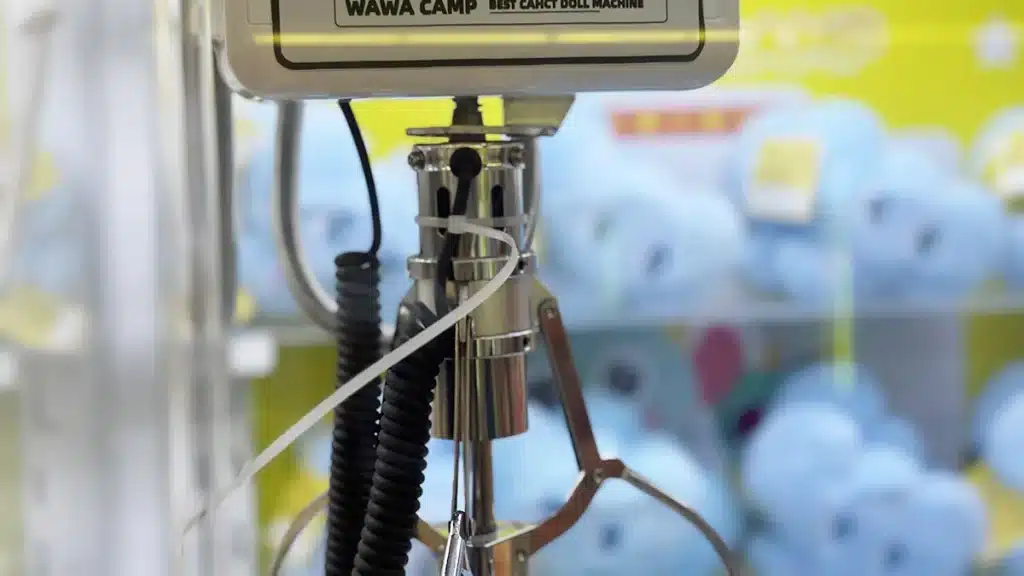
When the grabber moves, these cables and tubes may move with it. Without proper fixing, they can swing too much, become tangled, or touch the metal frame.
Small nylon cable ties are used here to guide the wires along the machine structure and keep the conduit from shifting. The goal is not to carry a heavy load. It is to keep the wiring stable, organized, and away from unnecessary friction.
Around the Motor
The motor area near the grabber also sees repeated movement. The claw opens, closes, rises, and drops cycle after cycle. If the cables around the motor are too loose, they may swing outward during operation. Over time, this may affect the movement of the grabber or cause wear on the wire insulation.
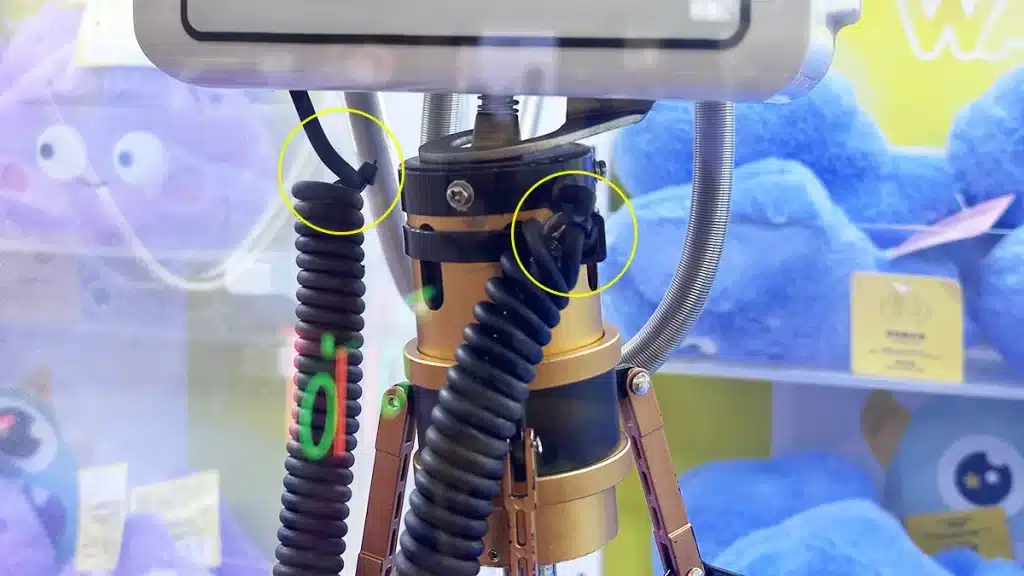
Cable ties are used to keep these wires close to the motor housing or the machine body. This is a simple but useful way to control cable movement in a compact space.
It is also important to be clear about their role. Cable ties are used here for auxiliary fixing, not structural support. The motor, grabber, pulleys, and shafts are still fixed by screws and mechanical fasteners. The cable ties only help manage the wires around them.
Internal Wiring Section
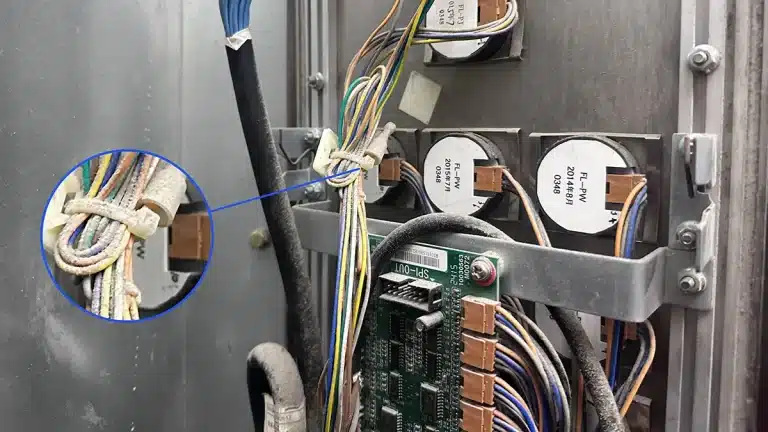
Further inside the machine, near the terminal blocks and control switches, the wiring becomes more complex. Power lines, control wires, and switch connections are all arranged in a small space.
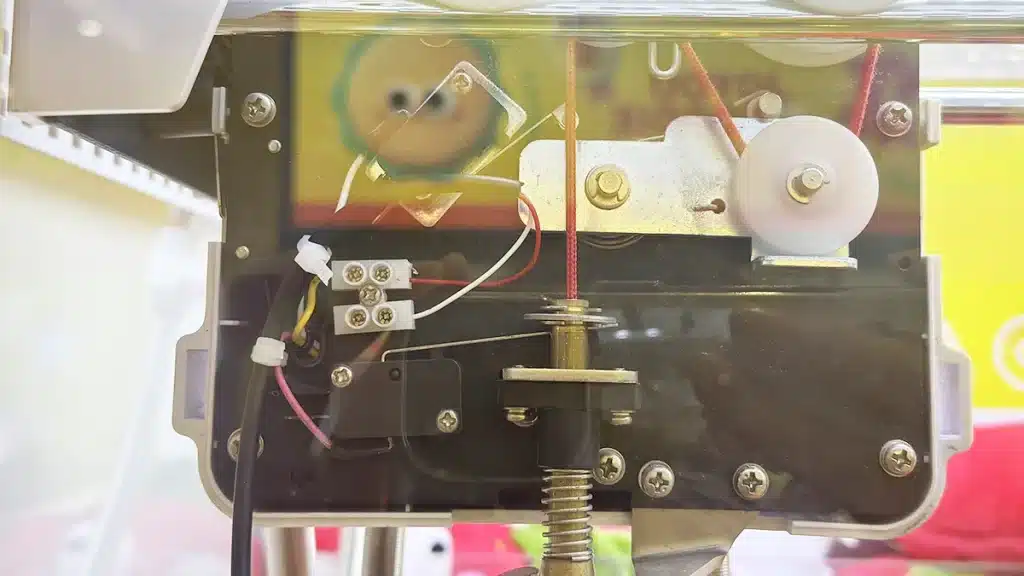
If these wires are left unorganized, the inside of the machine can become messy and harder to service. Cable ties help group small wire bundles together and keep them away from moving parts.
For maintenance workers, organized wiring makes a clear difference. It is easier to trace a wire, check a connection, and find a problem when the cable runs are neat.
Nylon Cable Ties: A Small Part with a Practical Role
Nylon cable ties are not a main component in a claw machine. They do not replace screws, brackets, or other mechanical fasteners. But in a machine that runs for long hours, moves frequently, and needs regular servicing, keeping the internal wiring clean and stable is still important.
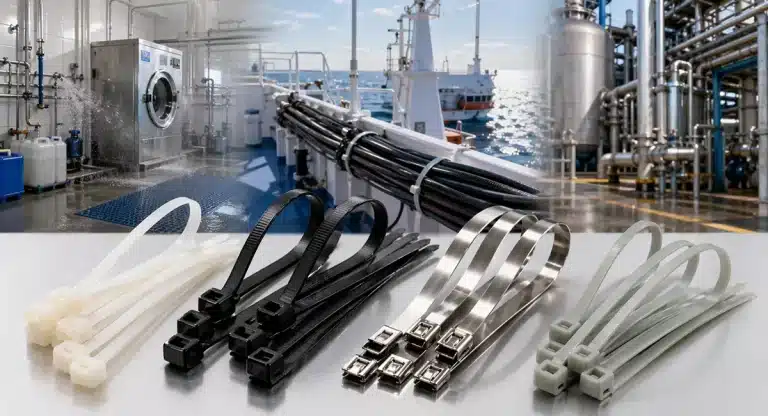
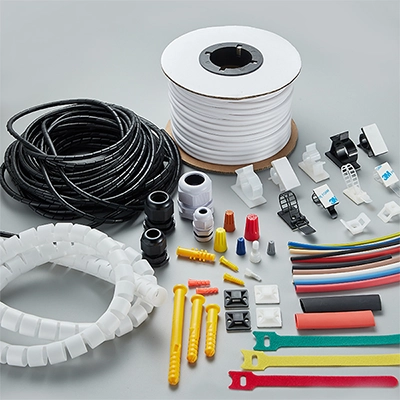
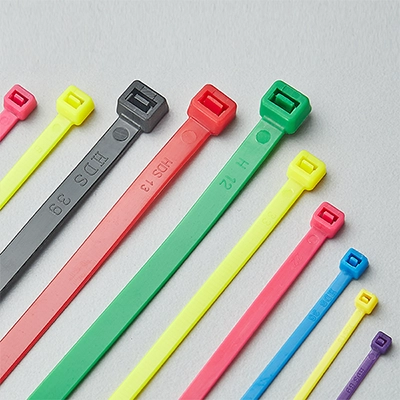
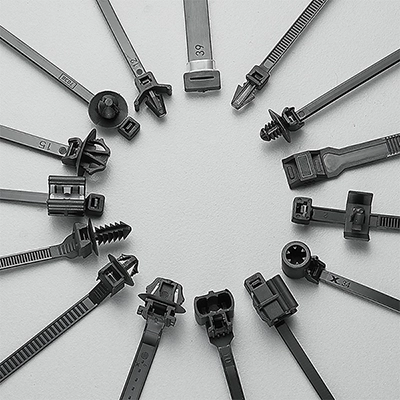
These photos show a simple application: nylon cable ties used for wire management, hose positioning, and light auxiliary fixing in a commercial claw machine.
This is also one of the most common ways cable ties are used. They may not be the most visible part of a product, but they often appear in the details. From industrial equipment and home appliances to claw machines in shopping malls, wherever wires need to be organized or hoses need to be fixed, nylon cable ties can often be found.