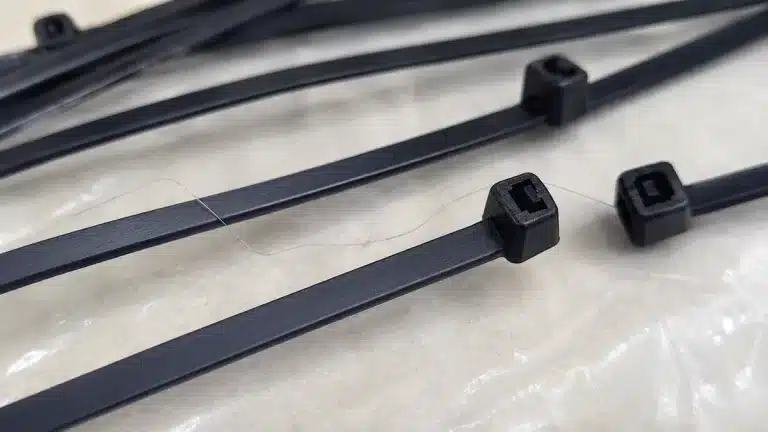
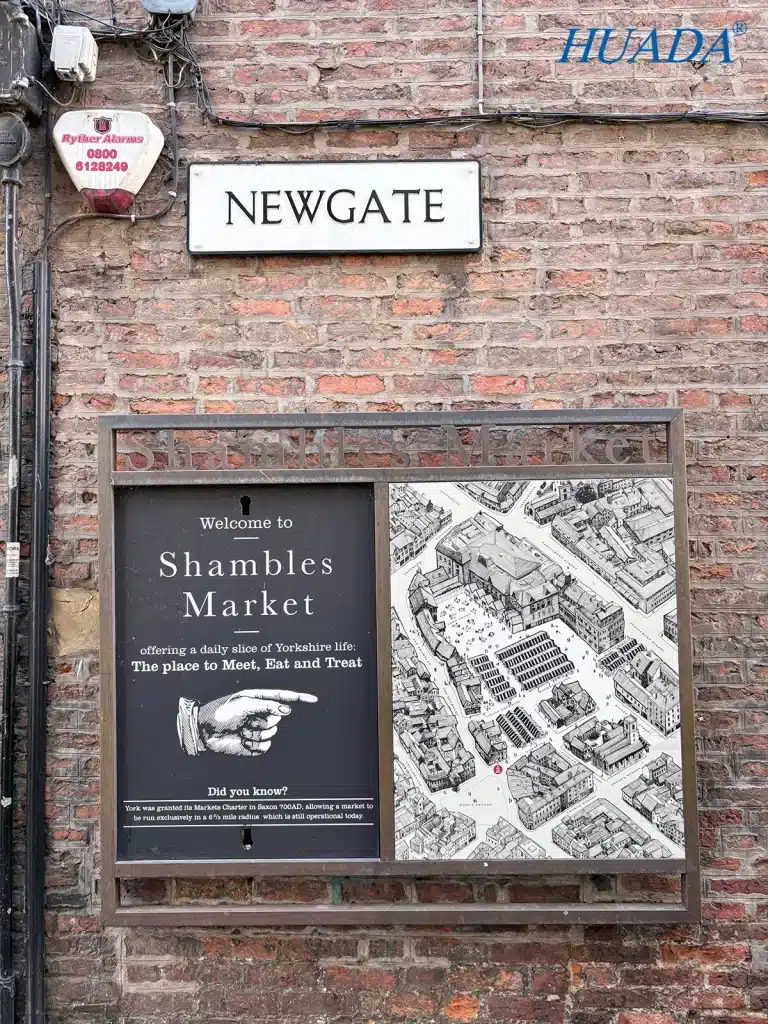
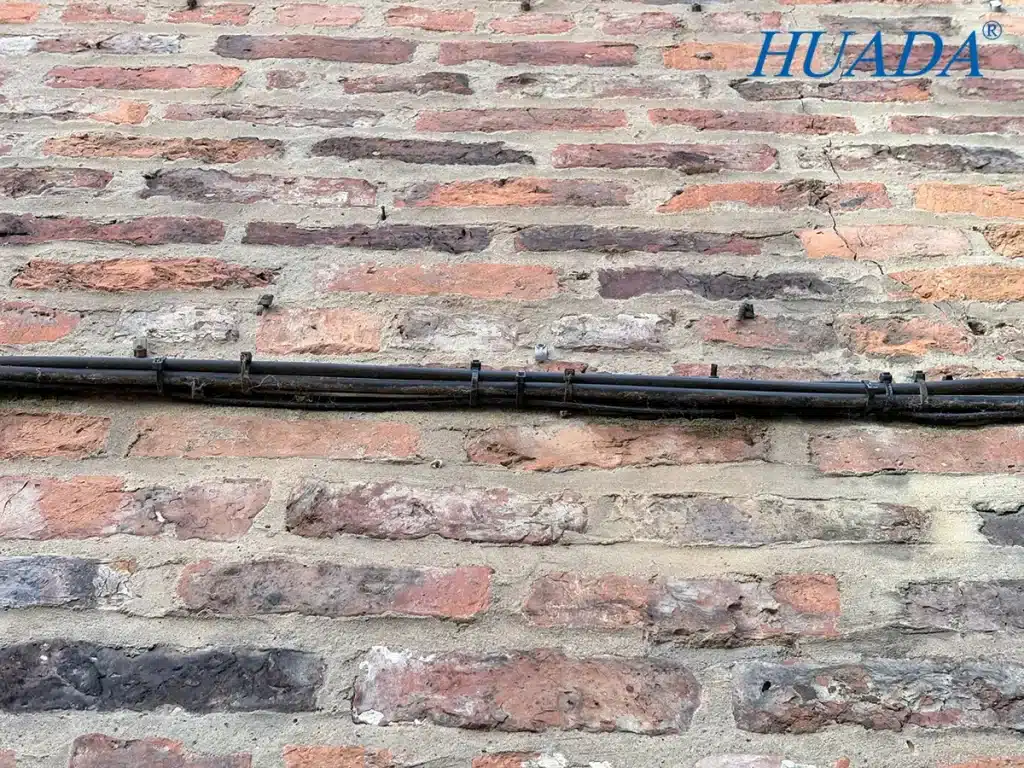
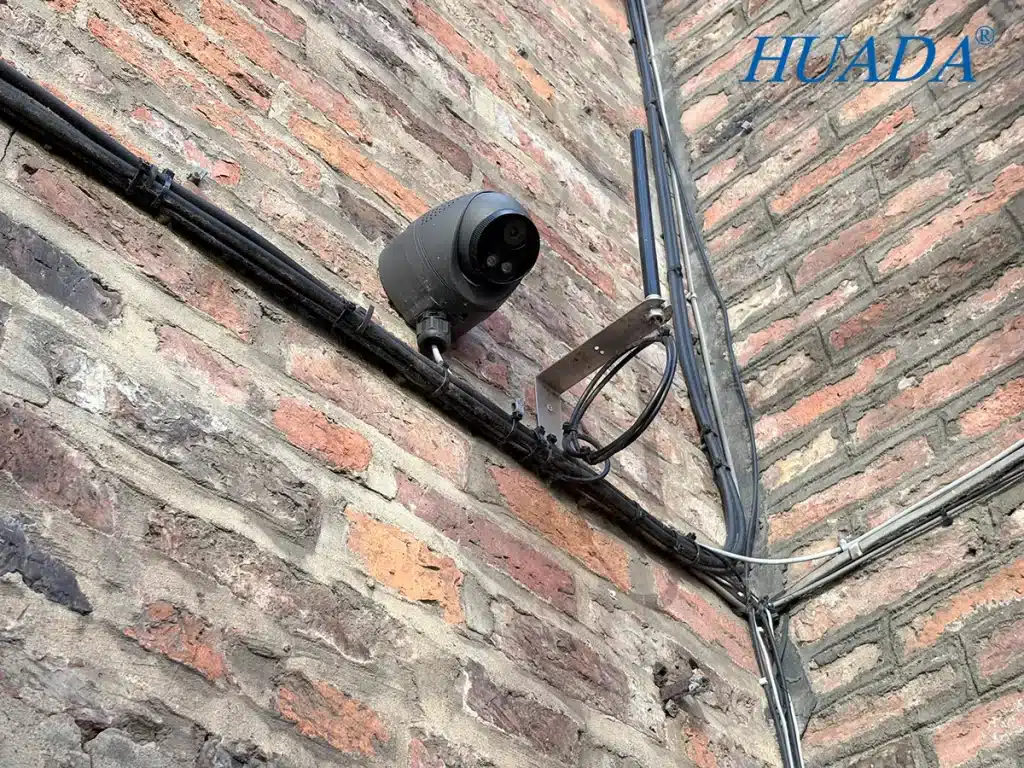
Along Newgate in York, England, you can see cables running across the old brick walls. Several black cables are bundled with nylon cable ties and run along the mortar joints, changing direction at wall corners, windows and security cameras. Some of the ties have dust and cobwebs around them, while others look fairly new. For cables exposed to outdoor conditions over the long term, the ability of these ties to withstand sunlight, rain and temperature changes also affects how securely the bundles stay in place.
Why Nylon Cable Ties Are Used on Old Brick Walls
York’s old town has preserved many historic buildings. On protected buildings, wiring work may be restricted, making it difficult to cut channels into walls, drill new holes or install bulky cable trunking. Surface-mounted wiring is still visible on some of these older buildings. The cables vary in diameter, and installers use nylon cable ties to gather them into neat bundles.
This approach also makes later changes easier. When cables are added or rerouted, the old ties can be cut and the bundles re-tied without replacing the entire wiring layout. However, nylon cable ties are mainly used for bundling. Supporting and securing cables to the wall still requires suitable cable clips, brackets or other fixings. Standard cable ties should not be relied on as the sole means of support.
Choosing Fixing Points on Old Brickwork
In the photos, some cables run along the mortar joints. There are also a few unused fixing points, possibly left from earlier installations or changes to the wiring.
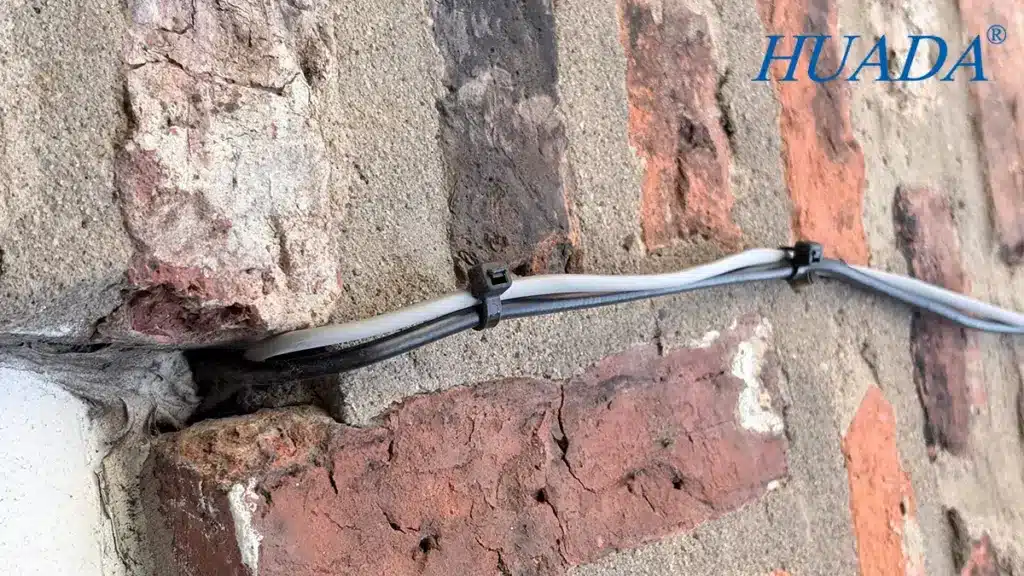
Older brick walls may have weathered bricks or loose mortar, and drilling directly into the bricks can cause damage. Where the wall condition allows, installers sometimes place fixing points in the mortar joints to reduce the impact on the bricks themselves.
Mortar joints are not always suitable for drilling either. For protected historic buildings, whether new fixing points are allowed and which fixing method to use depend on the condition of the wall and local building conservation requirements.
Bends and Branches: Tightness Is Not the Only Concern
In one photo, several cables run horizontally along the wall, then turn downward at a corner in a gentle curve. At points like this, the ties need to keep the bundle tidy without forcing the cables into a sharp right angle.
Different cables have different minimum bend radius requirements. Fiber-optic and data cables, in particular, may lose performance if bent too tightly. During installation, cables should follow a suitable bend radius, with additional fixing points where needed.
In another photo, a light-colored cable and a black cable are gathered together with cable ties, and the jackets show no visible deformation. If the ties are too loose, the cables may shift. If they are too tight, they can put unnecessary pressure on the cable jackets. Thin cables and cables with soft jackets need particular care.
For installations involving many cable ties, a tensioning tool can help maintain consistent tightening force.
Are Black Nylon Cable Ties Always UV Resistant?
The ties in the photos are mostly black, a common choice for outdoor wiring. But black does not automatically mean UV resistant.
Standard nylon cable ties exposed to sunlight for long periods can age, become brittle and lose strength. For long-term outdoor use, UV-stabilized PA66 cable ties are generally recommended.
Black UV-resistant ties typically use a suitable carbon black formulation to improve resistance to UV degradation. However, formulations and weathering performance vary between products, so color alone is not a reliable guide.
Some of the ties in the photos have dust and cobwebs around them, but there is no way to tell how long they have been in service or how much strength they retain. For cable bundles exposed outdoors over the long term, regular inspection matters just as much. Ties that are cracked, noticeably brittle or have loose locking heads should be replaced promptly.
Other Points When Selecting Cable Ties for Outdoor Wiring
Beyond UV resistance, selection should also consider bundle size, tensile strength and service temperature.
The tie length must suit the bundle diameter, while width and tensile strength should be chosen according to the bundle weight and fixing method, with an adequate safety margin. Cables that need independent support should be secured with appropriate fixings.
In cold weather, standard PA66 cable ties may become stiffer, particularly when their moisture content is low. Sharp bending or impact during installation can then increase the risk of breakage. If installation temperatures are low, choose ties suitable for low-temperature installation rather than relying only on the operating temperature range stated on the product.
Cable tie tails should also be trimmed cleanly, without leaving sharp edges that could cause problems during later maintenance.
Outdoor cables remain exposed to sunlight, rain and temperature changes throughout the year. On older buildings, replacing failed cable ties may also require additional access and maintenance work. Choosing the right material, avoiding overtightening and inspecting the ties regularly can help reduce unnecessary maintenance.