When sourcing nylon cable ties, many buyers run into the same question: why can two products that look almost the same have very different prices?
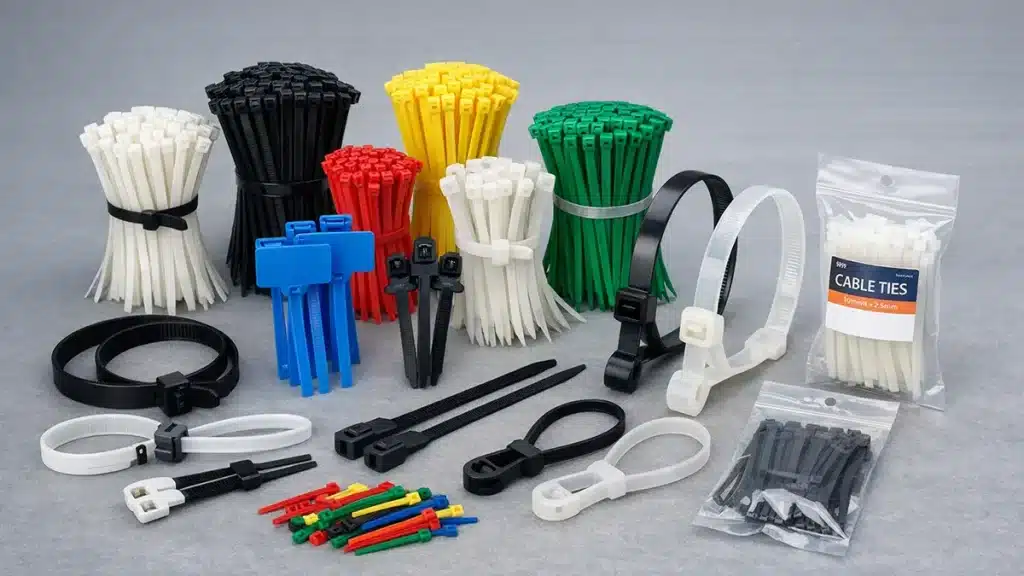
Raw material, actual dimensions, product type, performance requirements, color, packaging, and order quantity can all affect the final quote. In this article, we break down the 7 main factors that influence cable tie prices and explain what is really behind the difference.
1. Raw Material: The Biggest Cost Driver
Raw material is usually the first and most important factor in nylon tie pricing. The two most common materials are PA66 and PA6.

In general, PA66 offers better heat resistance, higher strength, and more stable overall performance, so it is widely used in industrial and performance-demanding applications. PA6 is more economical and can be suitable for general-purpose use. In most cases, the price of PA66 resin is more than 30% higher than that of PA6, which is one of the main reasons why two ties of the same size may still have different prices.
Even within PA66, the cost can vary depending on the brand and origin of the resin. Imported and domestic materials do not always cost the same. In addition, nylon resin is closely linked to the petrochemical supply chain, so its price is also affected by oil prices and upstream raw material fluctuations. When resin prices rise, cable tie prices usually follow.
2. Size and Actual Material Usage
Size is another major factor. The logic is simple: the longer, wider, and thicker the cable tie, the more material it uses, and the higher the unit cost.
However, the issue is not only the nominal size printed on the label. In the market, there is often a difference between standard-size cable ties and lighter non-standard versions. Standard cable ties usually have fuller dimensions and higher weight, while non-standard ones may be slightly reduced in width, thickness, or overall material usage, which makes them cheaper.

Even among standard products, different manufacturers may not produce exactly the same tie. The same nominal size can still vary in strap thickness, head design, tooth profile, and actual piece weight. For nylon cable ties, actual weight often says more about material usage than size marking alone. This is why products with the “same specification” can still have different prices.
3. Cable Tie Type
Price is also influenced by the type of cable tie. Standard self-locking cable ties are the most common and usually the most cost-effective because they are widely used, produced in large volumes, and made with mature tooling.
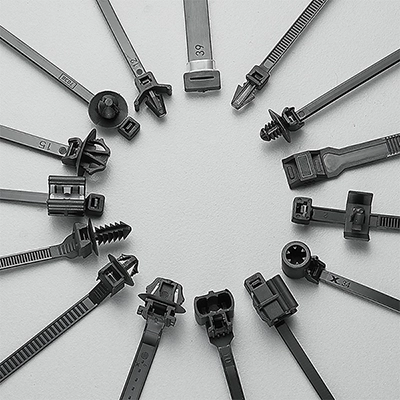
Specialty cable ties, on the other hand, are usually more expensive. These include products such as push-mount cable ties, marker cable ties, screw-mount cable ties, releasable cable ties, flat-head cable ties, handcuff ties, and double-loop cable ties.
There are two main reasons for the higher price. First, these products often require more complex molds and more specialized designs. Second, they are usually niche products with lower demand, which means mold cost and production cost are spread over fewer units. As a result, the unit price is often higher than that of standard cable ties.
4. Performance Requirements
Another key factor is whether the cable tie needs special performance properties. A standard nylon cable tie may be enough for basic bundling, but in more demanding environments, the material often needs to be modified or enhanced with additives.
For example, some applications require high-temperature resistance, UV resistance, weather resistance, flame retardancy, or low-temperature performance. These properties are achieved by using modified materials or adding specific additives during production, which increases material and processing costs.
That is why specialty cable ties are more expensive than general-purpose ones. The difference is not only in the added function, but also in the raw material formula and the higher production and quality control requirements behind it.
5. Color
Many buyers think color is only a visual difference, but it can also affect price. Common colors such as natural, white, and black are produced more frequently and are easier to manage in regular production, so their pricing is usually more stable.
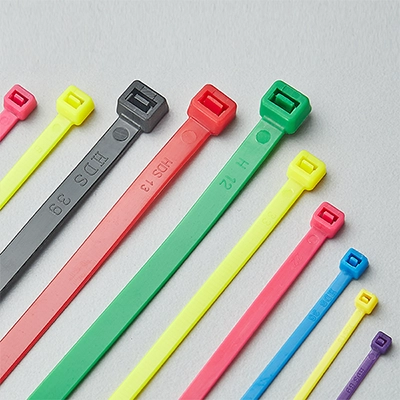
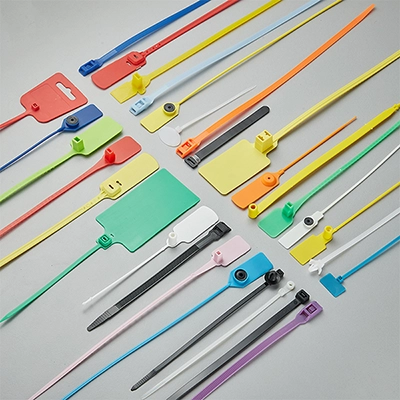
Colored cable ties, such as red, yellow, blue, and green, or customer-specific custom colors, often require additional color masterbatch and tighter color matching control. Some colors are more sensitive than others in production, which can increase cost.
This is especially true for small orders of uncommon colors, where material preparation and production setup are harder to spread across a large quantity. In short, standard colors are usually more price-stable, while special colors often cost more.
6. Packaging Requirements
Packaging is another factor that buyers sometimes overlook. For nylon cable ties, packaging is not just about putting the product into a bag. It can involve many different requirements, such as standard bulk packing, small retail packs, barcode labels, header cards, printed customer logos, carton marks, or customized carton sizes.
The more complex the packaging, the higher the overall cost. For example, a bulk-packed order and a retail-ready order of the same cable tie will not have the same price, even if the product itself is identical.
So when comparing quotes, it is important to check whether the packaging requirements are the same. Sometimes the price gap is not only about the cable tie itself, but also about how it needs to be packed and presented.
7. Order Quantity
Order quantity also has a direct impact on pricing. In general, the larger the order, the lower the unit price; the smaller the order, the higher the unit price.
The reason is straightforward: production, packaging, labor, and even freight all need to be spread across the order. When the quantity is large, these costs are shared across more units. When the quantity is small, the cost per piece naturally becomes higher.
This is even more obvious for custom sizes, custom colors, or custom packaging. These orders are often smaller in volume, but the preparation work is still required, including raw material planning, production setup, and packaging preparation. That is why small custom orders usually cost more than regular large-volume orders.
Conclusion
Nylon cable tie prices are influenced by many factors, including raw material, actual size and weight, product type, performance requirements, color, packaging, and order quantity. These factors do not work separately. In most cases, they combine to determine the final quote.
So when comparing prices from different cable tie manufacturers, it is not enough to look at the unit price alone. It is also important to make sure the key conditions are aligned, such as material, size, performance requirements, packaging, and quantity. Only then does the price comparison become meaningful.
If you are sourcing nylon cable ties, feel free to contact us. Not sure which type fits your application? We can send samples so you can test before you decide.