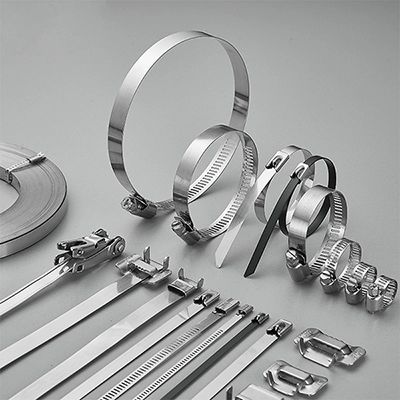
On construction sites, cable ties are a common tool for temporary fixing. Fences need to be moved as work progresses. Warning signs may change from day to day. Walkways may also be adjusted in stages. These items are “temporary”, but they still need to be safe and clear. They must stay stable, quick to install, easy to read, and easy to control.
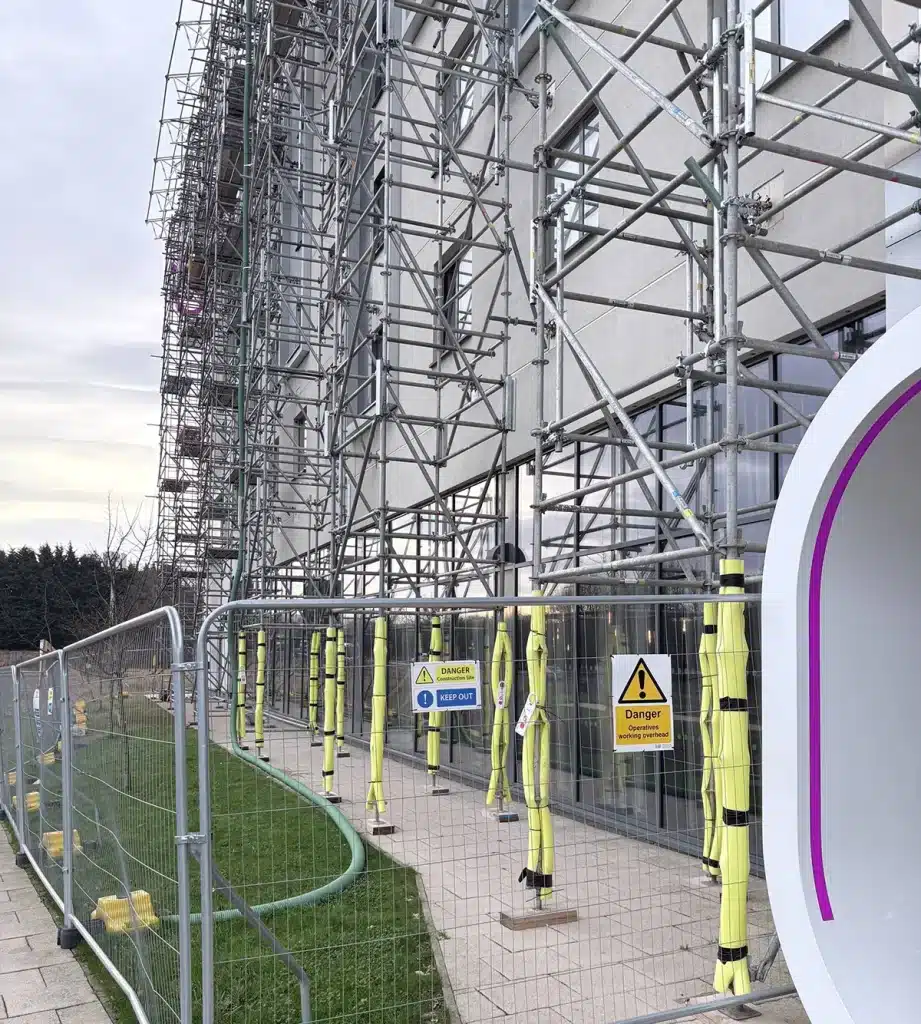
From this set of site photos in Germany (provided by Tom), it is clear that cable ties play a practical role. They are not the main focus, but they support many small details. These details affect site order and safety.
1. Fixing warning signs
The fence shows different safety signs, such as “Work in progress”, “Keep out”, “Danger—operatives working overhead”, and “Warning—hazardous substances present.” These signs have the same basic needs. The message must be visible. The sign must stay in place. And it must be easy to replace when site work changes.
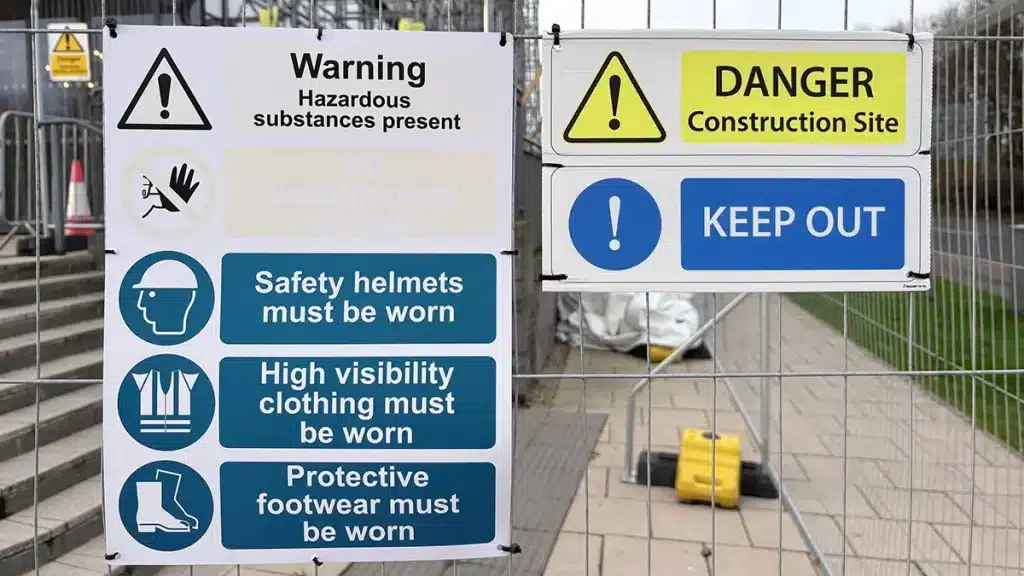
In the photos, most signs are fixed to the mesh fence with black cable ties. The sign is not tied to only one or two points. Instead, it is fixed at several points. The corners are often tied. Extra ties may be added along the edges. This helps prevent the sign from lifting, twisting, or flipping in the wind.
- This method has clear benefits:
- Fast installation: no power tools are needed.
- Fast replacement: cut the cable ties and fit a new sign.
- Good stability: multiple fixing points spread the load and reduce movement.
At site entrances, there is more foot traffic. Wind conditions can also change quickly. In these areas, it matters more that the sign is secure, readable, and easy to change.
2. Securing foam padding and protective sleeves
Yellow foam padding can be seen on fence rails and upright poles. It is mainly used near walkways, handrails, and corners. This simple protection helps reduce impact. If someone brushes against the metal, the foam can reduce the shock.
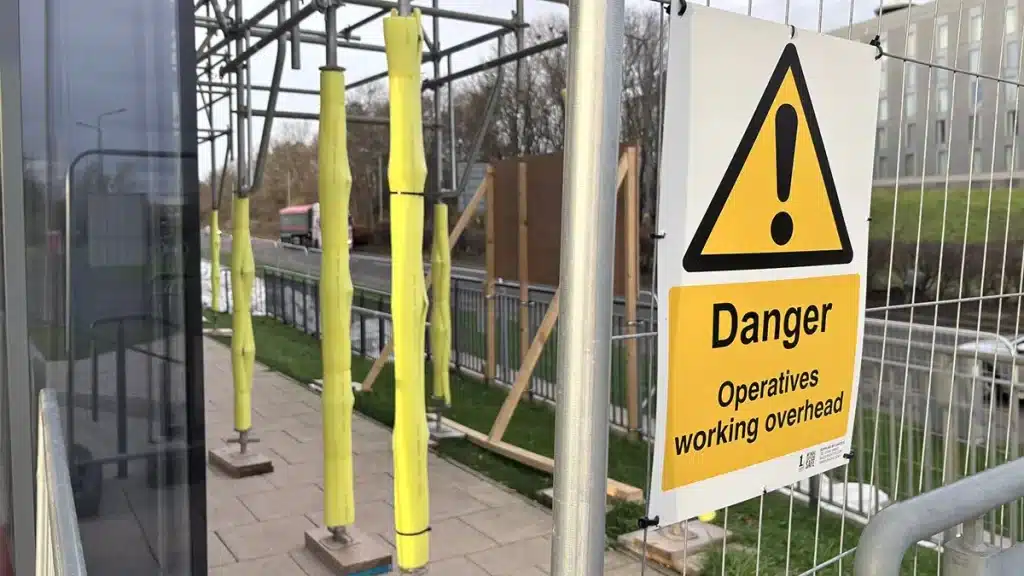
Foam padding can also move over time. Wind, friction, and daily contact may cause it to shift. Joints can open more easily than other areas. A common site method is to add a cable tie at the joint or key spot. This holds two foam pieces together and reduces movement. Once the cable tie is tightened, the foam stays in the right position. The protection then covers the area as intended.
3. Temporary reinforcement
Besides signs and padding, the photos also show cable ties used for quick reinforcement on fence connections and upright posts. This is common on construction sites. Some parts need quick positioning. Some need movement control. Some need to be kept from loosening.
In many cases, it may not be the right time to use metal clamps or bolts. Cable ties offer a fast, short-term solution. They help control risk and keep items stable. A more permanent fix can be done later.
This is why cable ties remain widely used on job sites. They do not replace standard fasteners. They support the work where a quick, temporary fix is needed.
4. Cable tie tail trimming
The photos also show some cable ties with long, untrimmed tails. If a cable tie tail is not cut properly, it can become sharp. It may scratch hands or catch clothing. This risk is higher in busy walking areas.
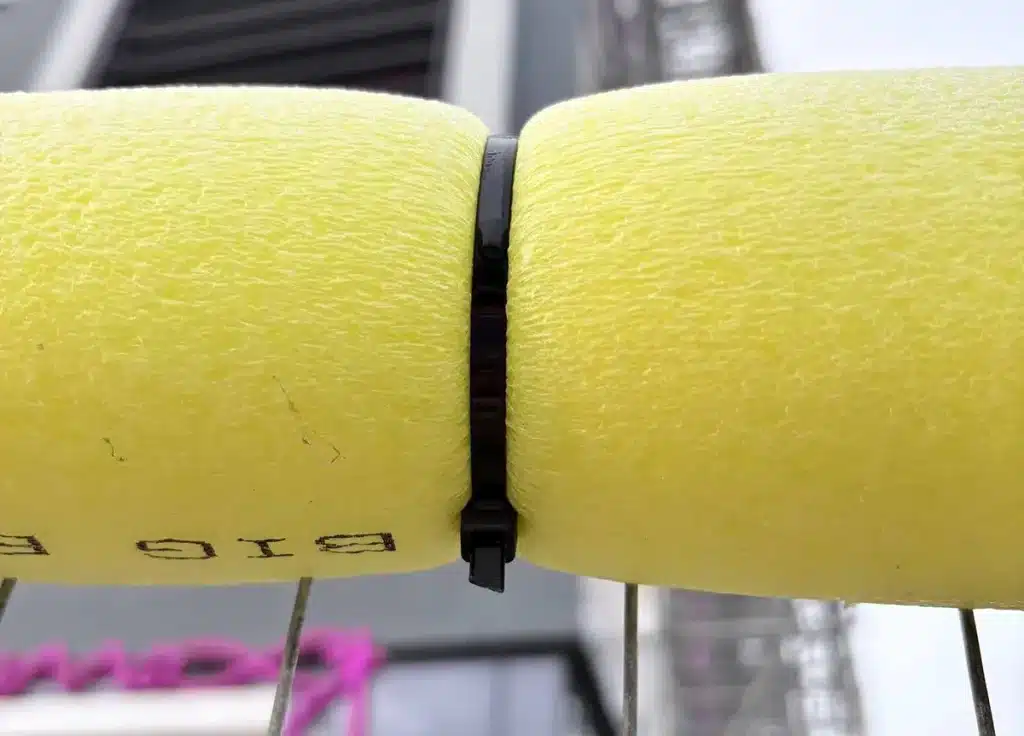
A simple habit helps: after tightening the cable tie, trim the tail and cut it flush. This small step improves safety and makes the site look more professional.
Conclusion
These German site photos show that cable ties are small items, but they solve real problems on site. They help keep warning signs stable. They help foam padding stay in place. They provide quick reinforcement when needed. They also remind teams to finish small details, such as tail trimming, to avoid new hazards.
Site management is often shown in these small actions. Cable ties are simple, but correct use matters. When the fixing is secure, clean, and easy to change, temporary site setups become safer and more reliable. For this reason, cable ties play a steady role on construction sites. They provide a simple and dependable method for temporary fixing.