These photos were taken on the streets of Madrid, Spain: a warning sign on a fenced-off construction area in a park, cable ties wrapped around an old window handle, and a contractor’s banner on a demolition-site fence. All three use black nylon cable ties for fastening. Two of these locations are outdoors, where the ties are exposed to sunlight and changing weather. Some still look fairly intact; others already show whitish marks on the surface. Many of the selection and installation issues that are easy to overlook outdoors show up in these few photos.
A Warning Sign on a Barrier: A Simple Job for Cable Ties
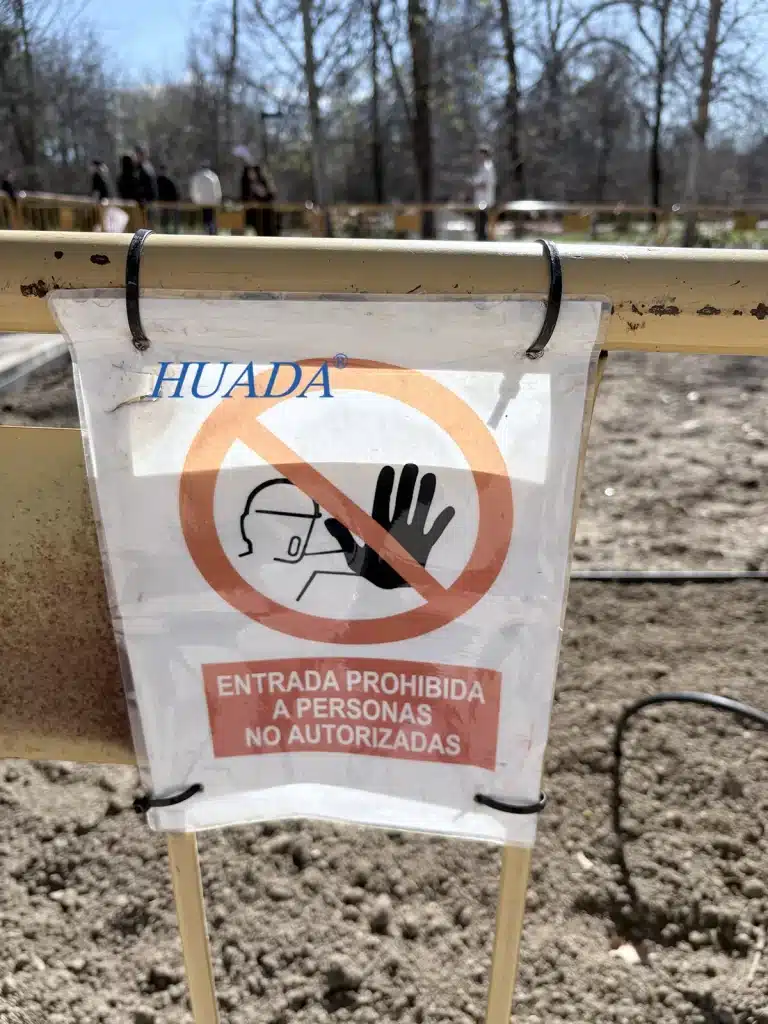
In the park, a dug-up flower bed is surrounded by yellow steel barriers. A sign reading “ENTRADA PROHIBIDA A PERSONAS NO AUTORIZADAS” (no entry for unauthorized persons) hangs on the barrier. The sign sits inside a clear plastic sleeve, and each corner is fixed to the barrier post with a black cable tie threaded through a hole in the sleeve. This is one of the most common uses of cable ties on municipal and construction sites. Signs move with the barriers and get taken down and put up often. Screws or wire are slower; a cable tie comes off with one snip, and a new sign goes up in seconds.
Up close, the red on the sign looks pale, and the clear sleeve shows some signs of wear. The black ties are still in place, with no obvious cracks visible in the heads or straps.
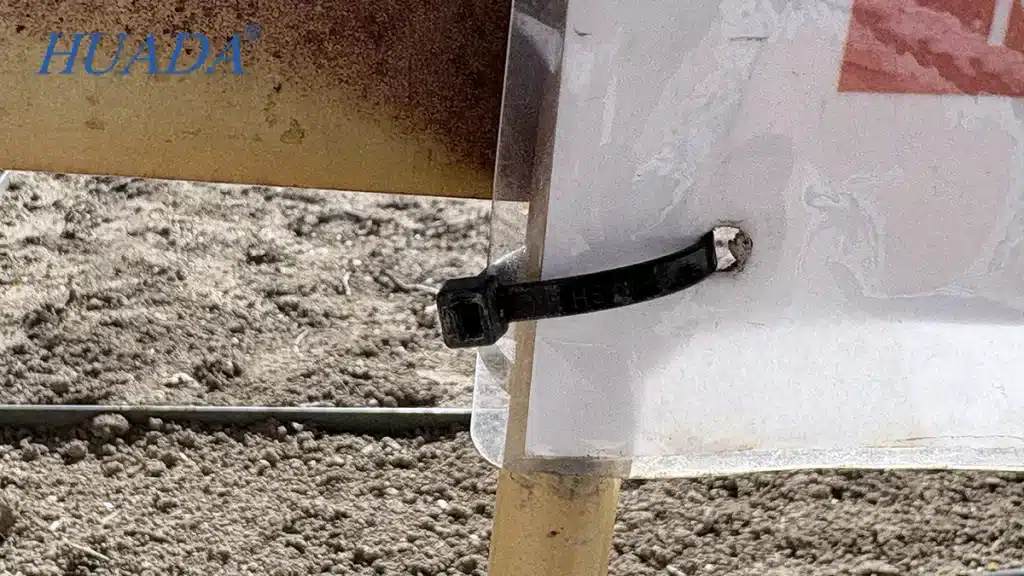
Small signs like this usually don’t demand much tensile strength from a cable tie. But if the sign is going to hang outdoors for months or longer, weather resistance can’t be ignored.
An Old Window: Cable Ties Around the Handle
On an old window, several black nylon cable ties are wrapped around the metal handle and the hardware on the frame, apparently to stop the handle from turning.
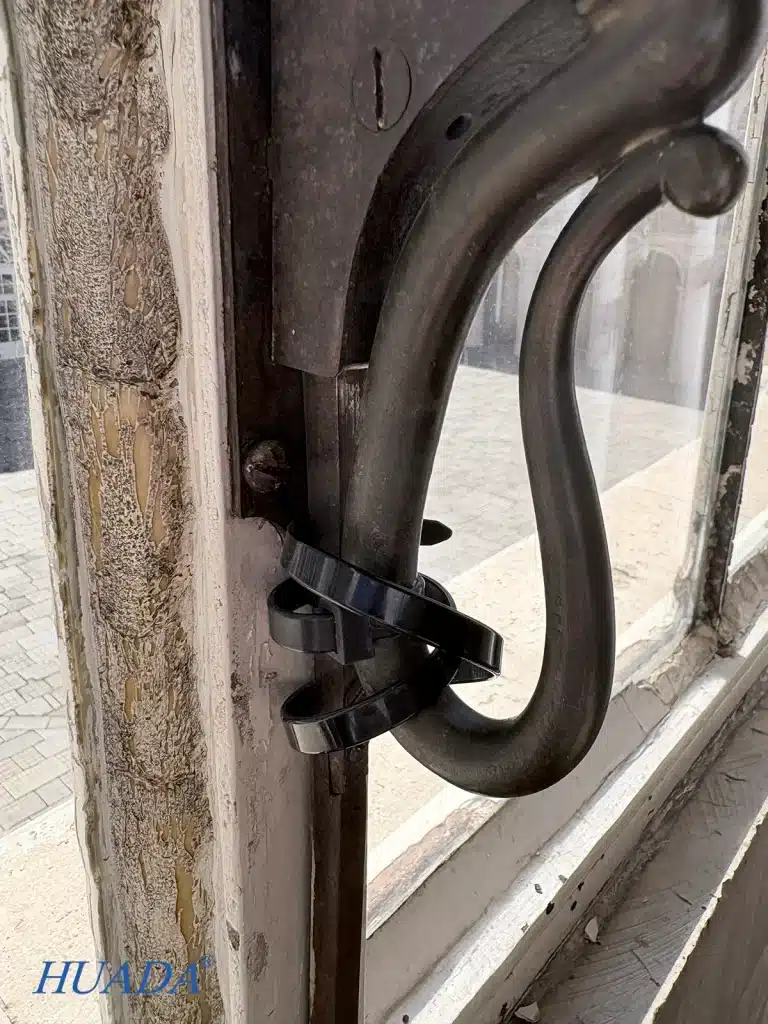
This needs no drilling, and the ties can be cut off when they are no longer needed. Still, a standard nylon cable tie is not a lock. It only suits temporary fastening where security isn’t a requirement, and it should never be used to keep shut a door or window that may be needed for fire evacuation.
The tails on these ties were left uncut, with the excess length sticking out at an angle. Where people pass by, uncut tails can catch on clothing or scratch hands. For one-off fastening, trimming the tail flush with a proper tool after tightening is the safer choice.
A Banner on a Site Fence: Wind on One Side, Sun on the Other
Outside a building under demolition, a steel mesh fence is covered with blue debris netting. The contractor’s banner is tied to the fence through metal eyelets around its edges. A banner has a large surface and catches a lot of wind. When the wind picks up, the load is transferred through the eyelets to the ties and the fence. The ties take repeated pulling rather than the relatively steady load of a small sign. It’s a much harsher job.
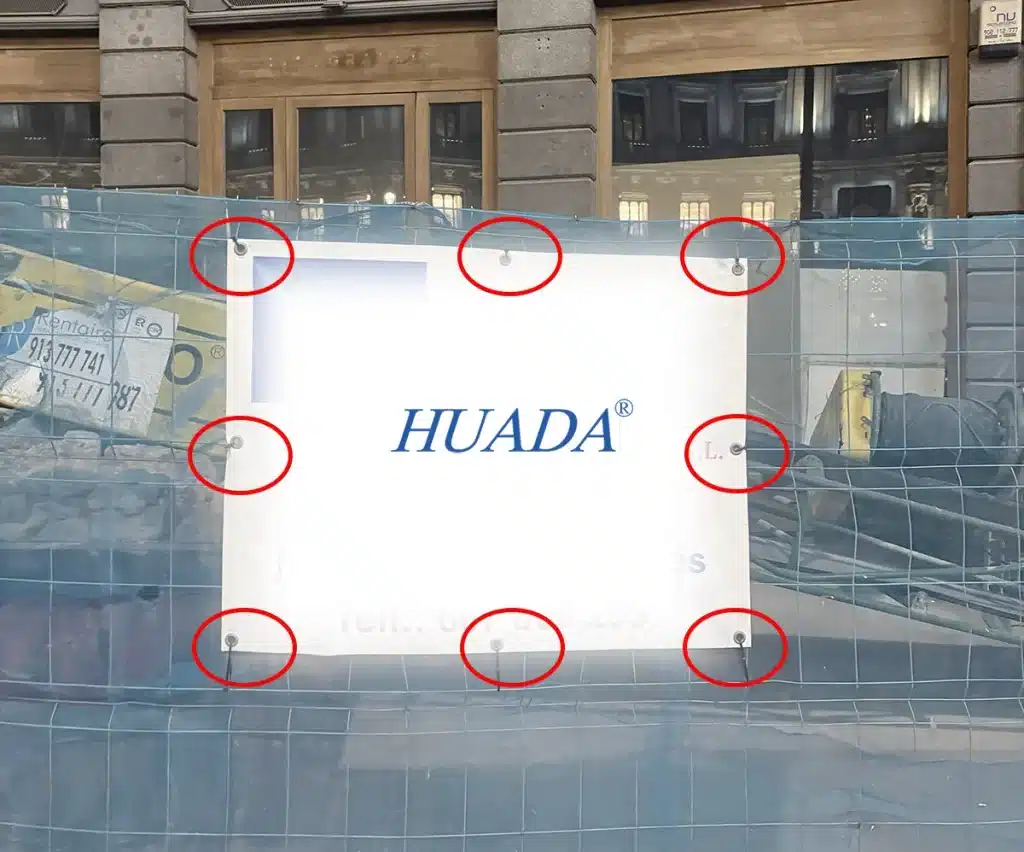
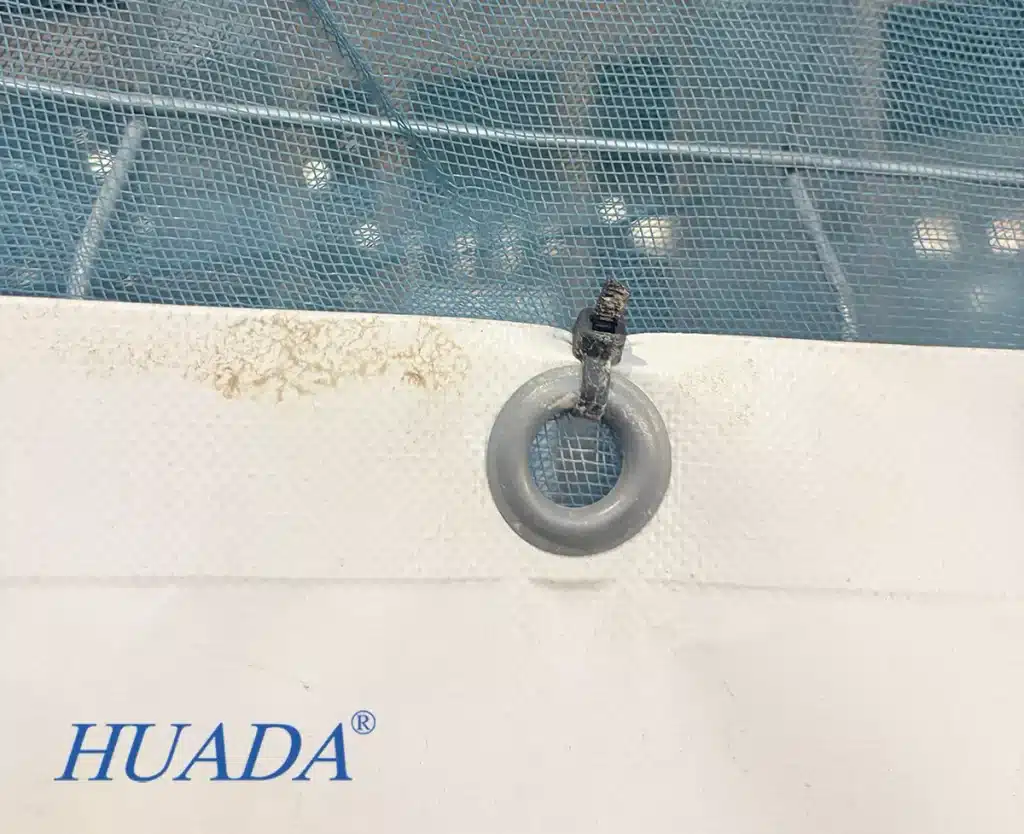
These metal eyelets are called grommets, and they spread the pull of the tie around a metal ring. If you punch a hole straight through the banner fabric and tie it tight, all the force lands on a small strip of material at the edge of the hole, and a strong gust can tear it open. Grommets help reduce this risk, but the banner’s own strength, the grommet spacing and the number of fixing points also decide whether it holds up in the wind.
The ties on this banner are not all in the same condition.
The tie at the top shows some greyish-white marks on its surface. Whether that is dust, abrasion or the material beginning to age can’t be determined from a photo alone.
Nylon cable ties exposed to UV for long periods can gradually undergo photo-oxidation, which reduces their flexibility and mechanical strength. During site checks, ties that have become noticeably brittle, are cracked, or snap with a slight bend should be replaced right away.
Ageing is not the same as biodegradation. When a cable tie becomes brittle and breaks into smaller pieces, that does not mean it has biodegraded. The fragments may remain in the environment and should be collected and disposed of properly.
The tie on the side is pulled fairly tight and the tail has been trimmed, but the cut is angled and leaves a sharp point. Several ties along the bottom have long uncut tails, and some of the loops look fairly loose. If the banner keeps moving in the wind, the ties may rub against the metal grommets and wear at those points.
Outdoor Cable Tie Installation: What’s Easy to Overlook
Choose weather-resistant ties, not just black ones. Not every black cable tie offers the same weather resistance, so for long-term outdoor use, check the material and weathering performance of the specific product. Black UV-resistant PA66 cable ties commonly use a suitable carbon black formulation to improve resistance to UV degradation. On site hoardings that stay up for months or longer, this difference matters.
Size the tie to the load. Narrow ties are often enough for small signs. Larger banners may need wider ties with a higher tensile rating, and fixing points spaced according to the banner’s size, not just one at each corner. The banner, grommets and fence must also be able to withstand the wind load.
Get the tension right and trim the tail flush. Too loose, and the banner swings back and forth and wears faster. Too tight, and the area around the grommets stays under constant strain and can tear in strong wind. Trim tails flush with a cable tie gun or flush cutters, leaving no sharp angle. It looks neater and won’t scratch passers-by.
Inspect regularly. Replace ties that show clear cracks, brittleness or locking failure. If several ties installed at the same time show similar problems, check the others as well and replace them where necessary. On long-term projects, note the installation date and inspect on a schedule.