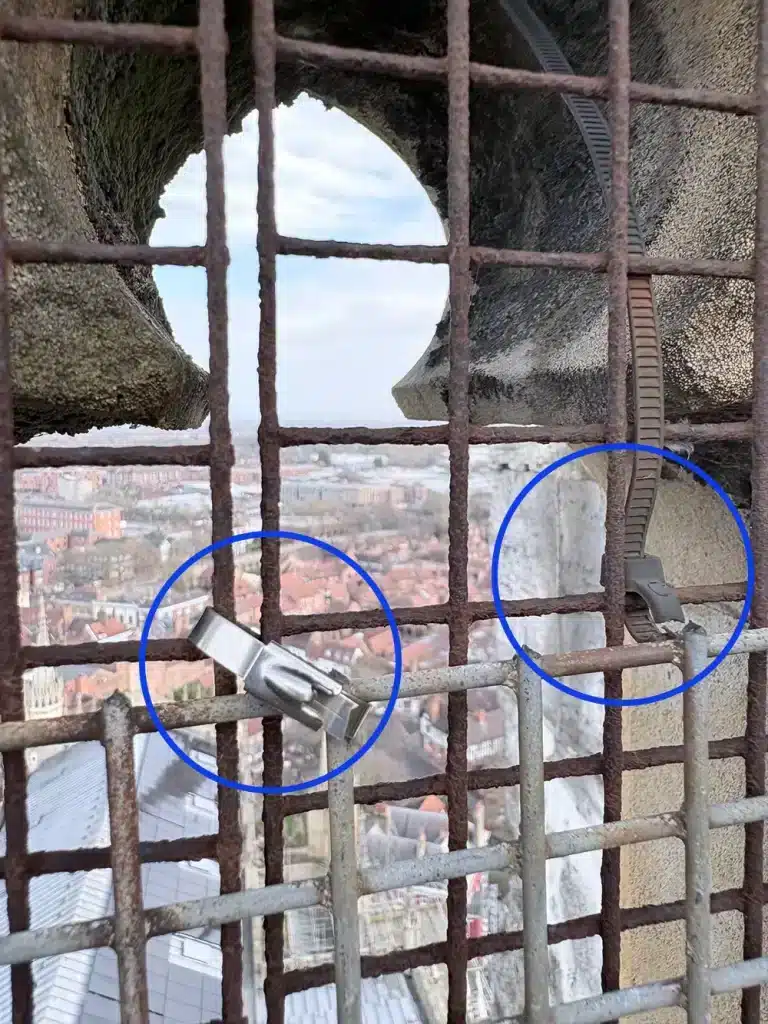
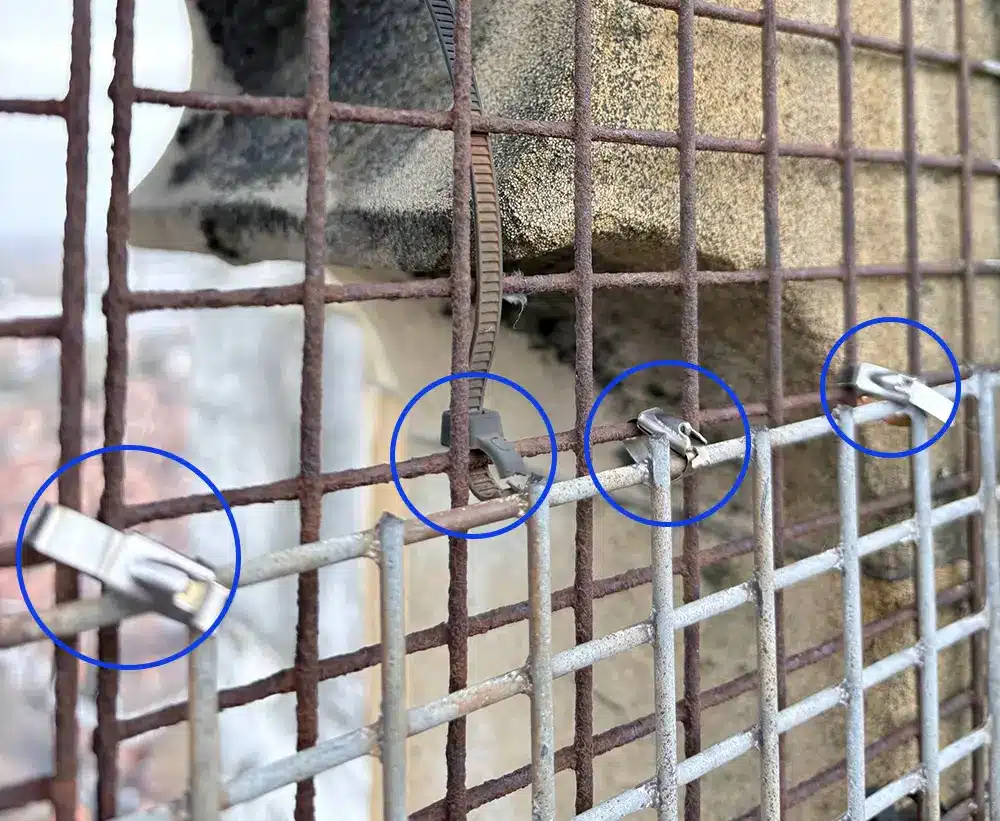
When I reached the top of York Minster, the first thing I noticed was how differently stainless steel cable ties and nylon cable ties had held up over time. The protective net was originally fastened with nylon ties, many of which had already turned white, become brittle, or snapped. Right beside them, the stainless steel cable ties added later were still tight and secure.
Seeing the two materials side by side immediately raised the question: Why does nylon fail here, while stainless steel lasts?

Photographs © T. WANG, licensed for use by Nike Plastic Co., LTD
York Minster sits in the city of York in northern England, with the central tower rising about 71 meters high. Up on the tower roof, the net, handrails, and walkways face constant UV exposure, cold, damp wind, and strong gusts throughout the year. Every fixing point matters, because visitors stand only a few steps away from these safety structures. In an environment like this, the material either survives—or it doesn’t. And nylon simply doesn’t last as long as stainless steel. And the answer lies in the environment itself.
1. Why York Minster Is an Extreme Test for Nylon Cable Ties
The top of the tower is almost the worst possible place for nylon cable ties. Everything about the environment pushes nylon toward early failure.
1. Strong UV exposure breaks nylon down over time
Nylon (PA66) slowly loses strength under UV light—its molecular chains weaken, the surface turns white, and the tie becomes brittle. At the top of York Minster, there is no shade at all, so the ties are exposed directly to sunlight every day. UV intensity is much higher than at ground level, and that accelerates the aging process dramatically. What might take years elsewhere happens much faster here.
2. Damp, cold weather and constant moisture changes
Northern England’s climate is harsh on nylon. The material naturally absorbs moisture, and when the weather shifts, it dries out again. This repeated swelling and shrinking gradually weakens its structure. Over months and years, this cycle reduces the tie’s tensile strength far more than occasional wet conditions would. The cold, damp air at the tower top simply amplifies the effect.
3. Continuous wind load makes the net move all year
The protective net on the tower never really sits still. It moves with every gust, sometimes gently, sometimes sharply. Each movement transfers stress to the cable ties, causing them to stretch slightly, relax, then stretch again—day after day. This type of cyclic loading is exactly what causes fatigue in nylon materials. Eventually, the tie cracks and fails, even without a single dramatic event.
In short, the combination of UV, moisture cycles, and wind-induced fatigue creates conditions far beyond what nylon cable ties were designed to handle.
2. Why Stainless Steel Cable Ties Can Survive Here
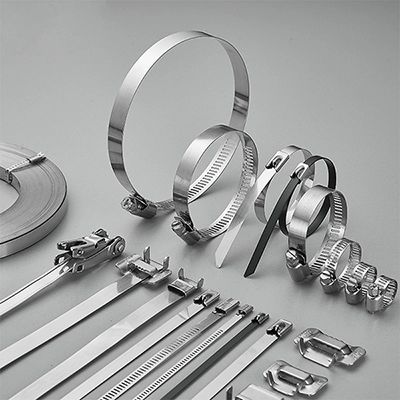
If nylon struggles at the top of York Minster, stainless steel cable ties do the opposite—they stay strong and almost unaffected by the same conditions. This is exactly the kind of environment stainless steel was made for. UV exposure, moisture, and wind that quickly damage nylon simply don’t have the same impact on metal.
1. Stainless steel is unaffected by UV and long-term sunlight
Sunlight breaks nylon down, but it does nothing to stainless steel. UV does not weaken the metal or change its structure, so stainless steel cable ties can stay outdoors for years without losing their strength. At the tower top, where there is no shade at all, this makes a huge difference.
(One note: 201 stainless steel is not suitable here, because it can corrode. 304 or 316 stainless steel is the right choice.)
2. Moisture, cold air, and damp weather don’t reduce their strength
Northern England’s cool, humid climate is tough on nylon, but stainless steel cable ties handle it easily. They do not absorb moisture, do not swell or shrink, and maintain their mechanical strength even after years of exposure to cold wind and damp air. This stability is especially important for safety structures like the protective net.
3. Higher tensile strength to resist constant movement in the wind
The net at the top of the tower moves every day, sometimes slightly and sometimes sharply. This motion creates repeated loading on the cable ties. Nylon eventually fatigues under this kind of stress, but stainless steel cable ties can handle it without cracking or stretching. Their much higher tensile strength allows them to keep the net tight and secure, even under strong gusts.
In short, stainless steel cable ties succeed here because they are built for environments that combine strong UV, moisture, and constant wind load—the very factors that make nylon fail.
3. Materials Are Not Better or Worse—They Simply Have Different Jobs
Seeing a broken nylon tie next to a stainless steel cable tie that still looks new might make it seem like stainless steel is the “better” material. But that’s not really the point. Materials don’t compete with each other; they are chosen because each one fits a different job. Nylon cable ties are used everywhere in the world not by accident, but because they offer advantages stainless steel can’t replace—light weight, flexibility, electrical insulation, and quick installation. Stainless steel cable ties, on the other hand, are meant for heavy loads and harsh outdoor environments. Their missions are completely different.
When to Choose Nylon Cable Ties
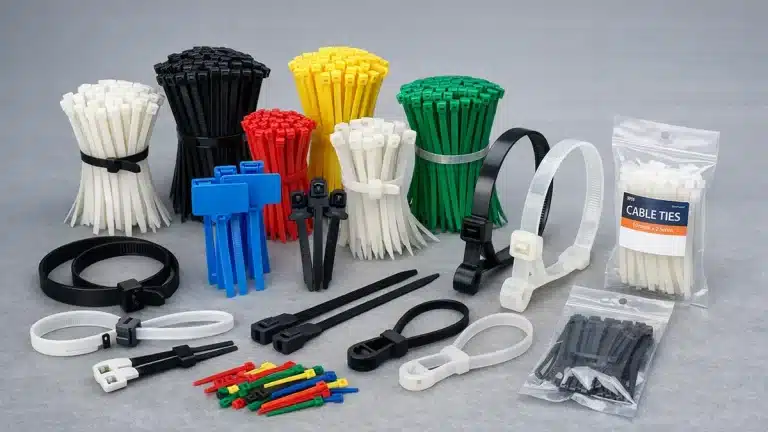
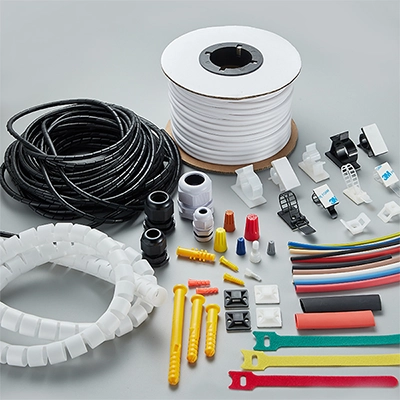
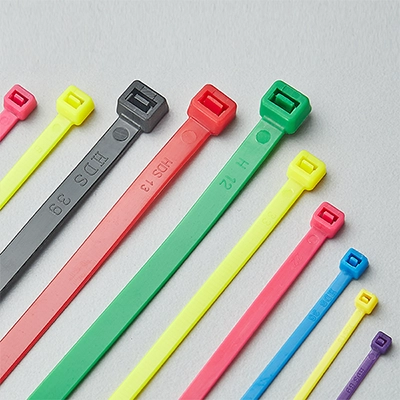
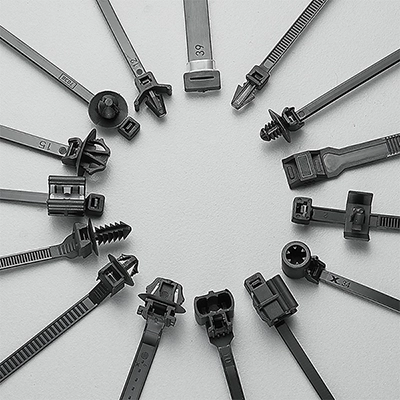
Nylon cable ties are ideal for light-duty, insulated, or frequently adjusted installations. They are easy to work with and safe around electrical wiring because nylon does not conduct electricity.
For indoor cable management, appliances, low-voltage systems, and light outdoor fixtures, nylon is not just “good enough”—it’s the most practical option. In many outdoor cases where loads are small and the structure doesn’t move much, UV-resistant cable ties perform perfectly well.
Typical uses include:
- indoor and outdoor cable routing
- electrical and low-voltage wiring
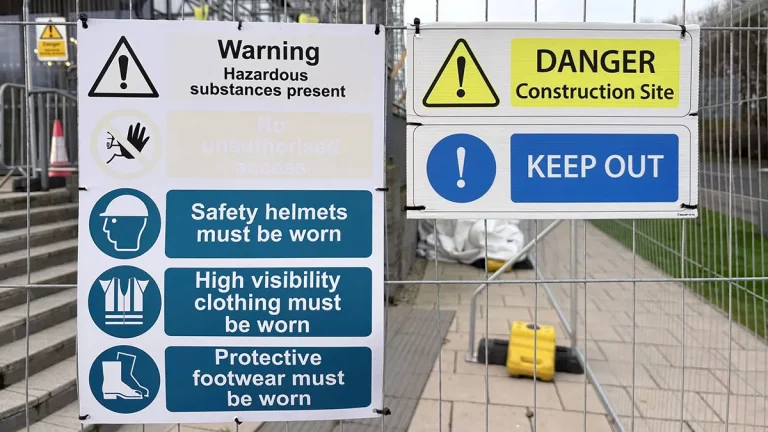
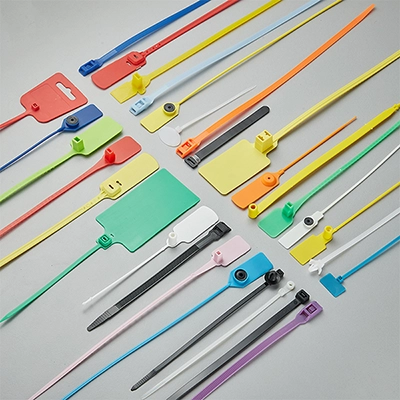
- small signs or warning tags
- internal components in appliances, vehicles, or server rooms
- lightweight tubing or protective strips
Nylon’s mission is simple: light load, insulation, flexibility, and ease of installation.
When Stainless Steel Cable Ties Become Necessary
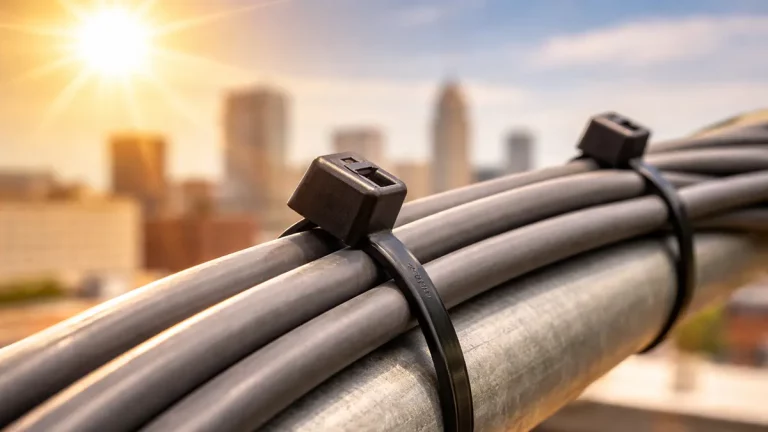
Stainless steel cable ties are not replacements for nylon. They take over when the job involves heavy loads, harsh weather, long-term exposure, or safety-critical structures. Their high tensile strength allows them to secure large pipes, ducts, bridge cables, or outdoor installations where vibration or wind load is constant. They also withstand high temperatures, making them suitable for engine compartments or heating equipment—places where nylon would soften.
Typical uses include:
- large pipes and industrial ducts
- telecom towers and outdoor lighting
- high-temperature zones near engines or exhausts
- bridges, tunnels, and rail installations
- marine and chemical environments
- safety nets and fall-prevention barriers
Stainless steel’s mission is clear: strength, durability, and resistance to extreme conditions.
In short
Nylon cable ties and stainless steel cable ties are not competitors. They solve different problems. The key is not choosing the “stronger” material, but choosing the right material for the environment.
4. Final Thoughts
The broken nylon cable tie at the top of York Minster is not a sign of poor quality. It simply reached the limit of what nylon was designed to handle. Strong UV, constant moisture changes, and nonstop wind movement make the tower roof an environment far beyond nylon’s comfort zone. The tie did its job for a while, then stepped aside for a material that could carry the load.
Stainless steel cable ties take over because their mission is different. They stay strong in places where failure isn’t an option—whether that’s a protective net on a historic tower, a heavy pipe on a bridge, or a high-temperature zone near an engine. Nylon cable ties, on the other hand, remain the best choice for light-duty, insulated, and flexible installations.
In the end, choosing the right cable tie matters more than the cable tie itself. When the environment is understood, and the material is matched correctly, both nylon and stainless steel can perform exactly as they were meant to.
Appendix: Tensile Strength Comparison – Nylon Cable Ties vs Stainless Steel Cable Ties
Below are common reference values for nylon cable ties and stainless steel cable ties. Actual performance may vary depending on brand, material formulation, and structural design.
Nylon Cable Ties (PA66) — Typical Tensile Strength
(Based on common industry ranges, including QB/T 4494-2018)
| Width | Typical Tensile Strength |
| 2.5 mm | 8–10 kgf |
| 3.6 mm | 15–18 kgf |
| 4.8 mm | 22–24 kgf |
| 7.6 mm | 50–55 kgf |
Stainless Steel Cable Ties (304 / 316) — Typical Tensile Strength
| Width | Typical Tensile Strength |
| 4.6 mm | 100–150 kgf |
| 7.9 mm | 150–200 kgf |
| 12 mm | 200+ kgf |
These values show why stainless steel cable ties are chosen for heavy loads, high wind, high temperature, or safety-critical structures, while nylon cable ties remain the preferred option for light-duty and insulated applications.