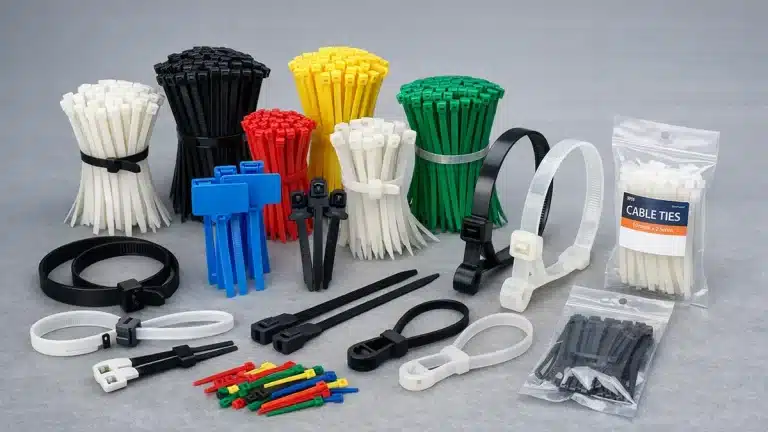
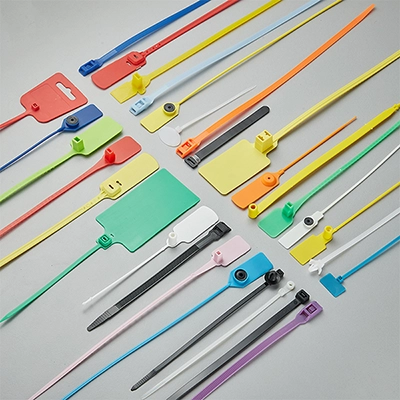
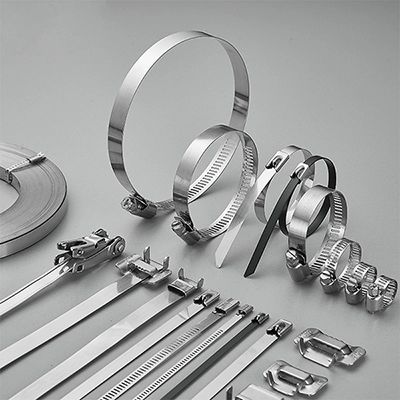
Cable ties are not the most eye-catching components inside Dyson Farming’s vertical farm. In content and videos published by Dyson Farming, attention is usually drawn to the rotating growing systems, automated harvesting equipment, and the overall engineering approach to energy and environmental control. Yet within this highly engineered agricultural system, cable ties—especially nylon cable ties—appear repeatedly around structures, pipelines, and cable runs.
Dyson Farming’s vertical farm is a production system designed for long-term operation, continuous adjustment, and ongoing maintenance. A large number of hoses, cables, sensors, and lightweight components need to be guided, restrained, and kept in position, while still allowing for regular reconfiguration. In these locations, rigid or permanent metal fixings are often unsuitable. The use of nylon cable ties here is not a design feature, but a practical engineering choice.
Typical Use Locations for Cable Ties in Dyson Farming’s Vertical Farm
Dyson Farming is an example of how engineering principles are applied directly to modern agriculture. Its vertical farming system uses rotating growing structures inside a greenhouse environment to support high-density, year-round strawberry production. Unlike traditional open fields, this type of system is highly compact. Irrigation lines, electrical cables, sensors, and lightweight components all exist in the same space, making cable management and basic fixing part of daily operation.
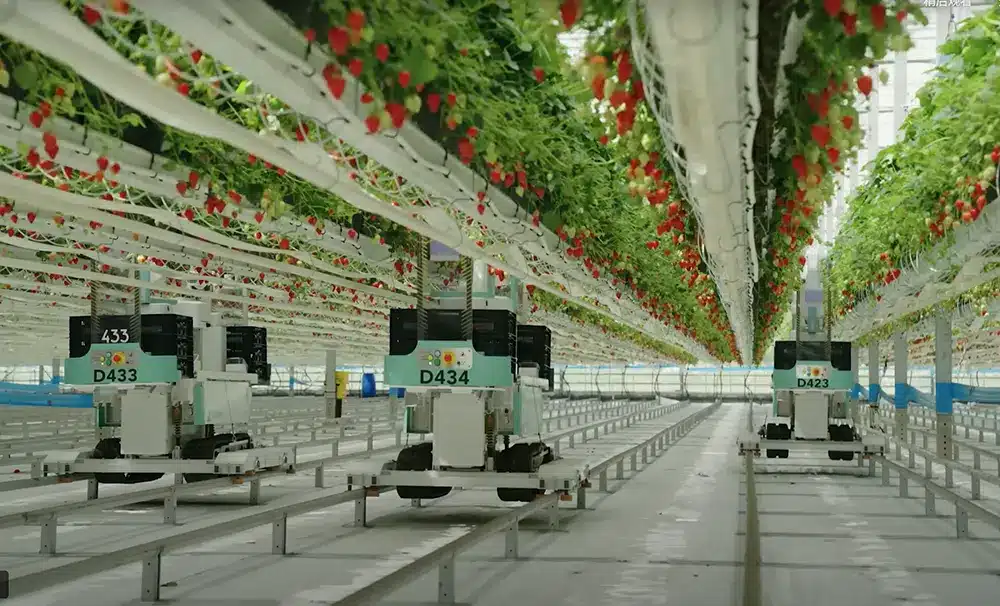
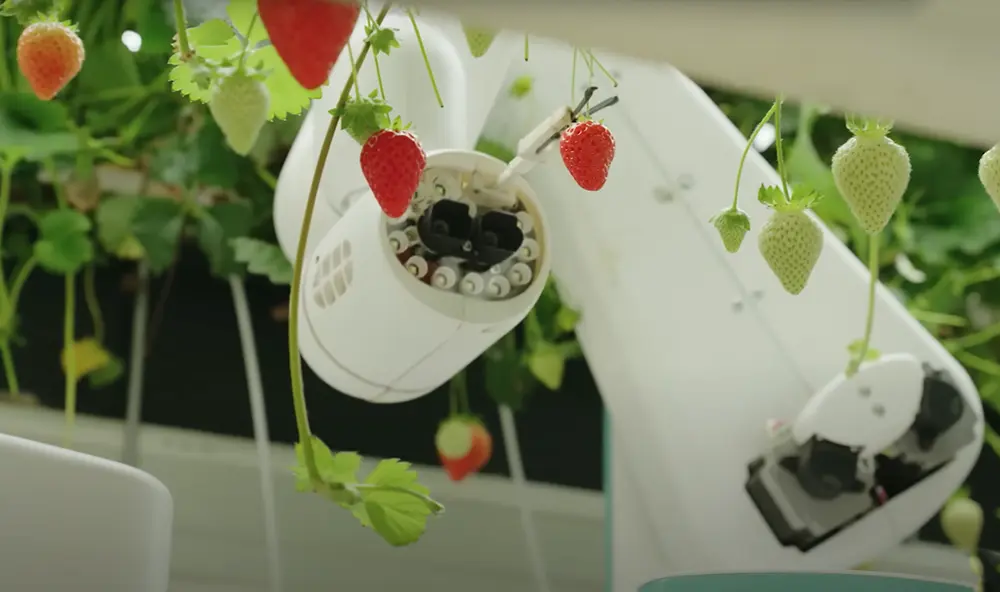
Inside the farm, a wide range of automated equipment operates alongside the growing system. UV robots move through planting rows to control disease by targeted leaf exposure. Robotic arms handle harvesting with millimetre-level accuracy. At the same time, a dense sensor network continuously monitors temperature, humidity, light levels, and CO₂ concentration throughout the greenhouse. Together, these elements form a tightly integrated system with many connection points but relatively few locations that carry significant structural load.
As the rotating vertical structures move, they must work in coordination with irrigation hoses, power cables, signal lines, and various branch connections. Compared with conventional farming setups, there are far more points that need to be held in place, guided, or kept clear—without being rigidly fixed. These are precisely the situations where nylon cable ties are typically used.
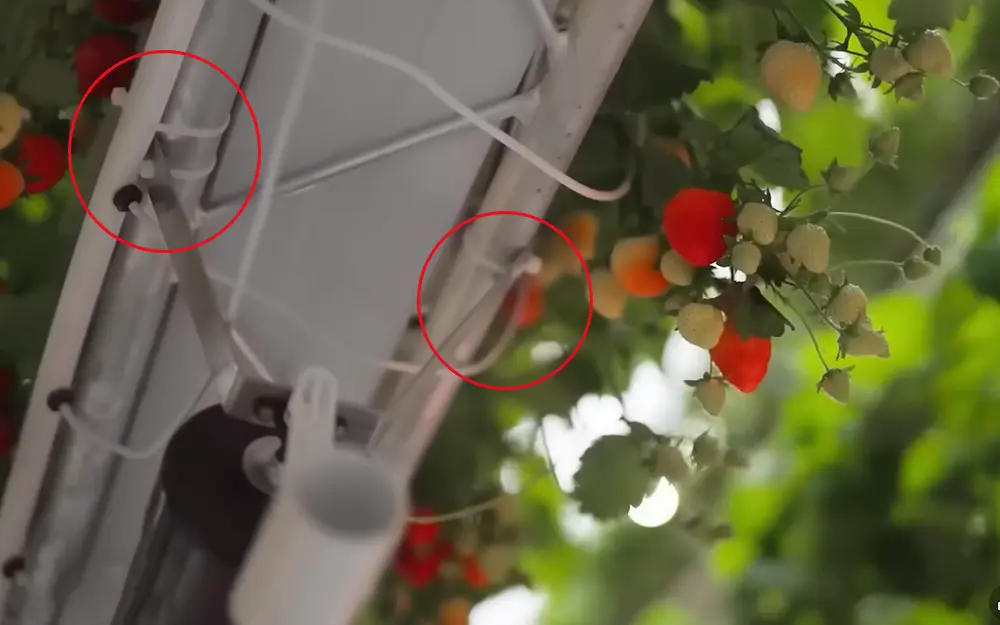
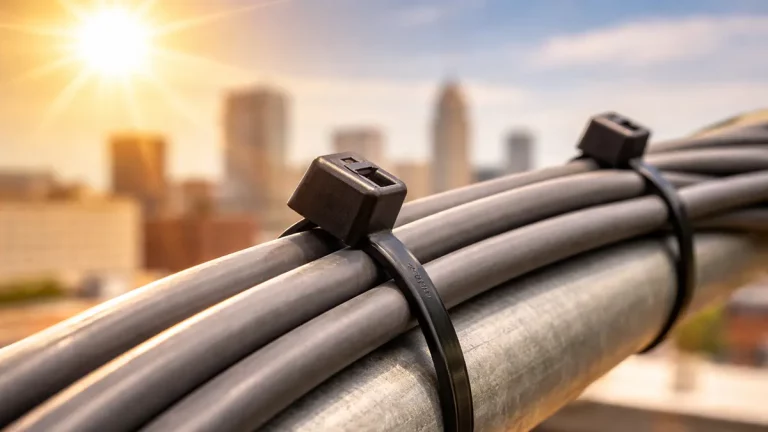
In practice, nylon cable ties are applied mainly for organisation and restraint rather than load-bearing. They help guide irrigation hoses to prevent tangling during rotation or movement. They keep sensor cables aligned with structural members, reducing wear caused by vibration or accidental contact. Around UV robots and automated equipment, similar light-duty fixing needs appear repeatedly. These components require stable positioning and clean routing, but rigid metal fasteners would be unnecessary and sometimes counterproductive.
The vertical farm is also not a fully static or low-light environment. To support year-round production, the greenhouse is exposed to strong natural light, often combined with artificial supplemental lighting in certain zones. Under prolonged light exposure, standard materials can degrade over time. For this reason, agricultural systems often rely on UV-resistant cable ties rather than standard indoor types. UV stabilisation helps maintain flexibility and mechanical strength over long periods of exposure, reducing premature ageing in greenhouse environments. This is a key distinction between agricultural-grade cable ties and those designed for indoor applications.
Overall, nylon cable ties do not play a structural role in Dyson Farming’s vertical farm. Instead, they support the system at a detail level—keeping layouts tidy, routes clear, and maintenance manageable. These small, routine fixing points may be easy to overlook, but together they contribute to the stable day-to-day operation of a highly automated agricultural system.
Conclusion
From the overall design of Dyson Farming’s vertical farm, nylon cable ties are not part of the system’s technological innovation. Yet in an agricultural environment defined by strong light exposure, continuous operation, and dense equipment layout, they become a practical and almost unavoidable choice in daily operation. Lightweight, easy to adjust, and—with the right specifications and UV resistance—durable enough for agricultural use, they meet the basic demands of this setting without adding unnecessary complexity.
For this reason, the use of nylon cable ties in Dyson Farming’s vertical farm should not be seen as an incidental detail. Instead, it reflects how engineered agriculture takes shape in real-world conditions, where small, practical fixing solutions quietly support the reliability, order, and maintainability of a highly automated system.