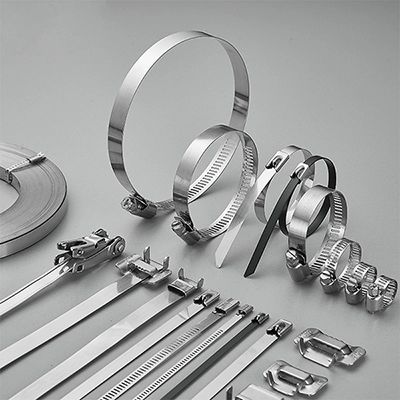
For many DIY makers, cable ties are not just tools for organising wires. They are more like a universal helper. When something needs to be temporarily fixed, quickly connected, or loosely assembled for testing, the first instinct is often not to reach for screws or glue, but to grab a cable tie and pull it tight. In just a few seconds, a basic structure takes shape—and if changes are needed, it is just as easy to undo and rebuild.
Because cable ties are fast, stable, and easy to work with, they naturally find their way into projects far beyond cable management. From improvised tyre traction solutions and hand-woven crafts to helmet decorations and even DIY furniture, ties appear in places that seem completely unrelated at first glance. Below are 6 creative DIY uses shared by makers, showing how a simple cable tie can do much more than just bundle wires.
1) Adding “Anti-Slip Chains” to a Tire with Cable Ties
On thin snow or icy roads, bike tires can lose grip quickly. Some DIY makers use cable ties to build a simple, temporary traction setup.
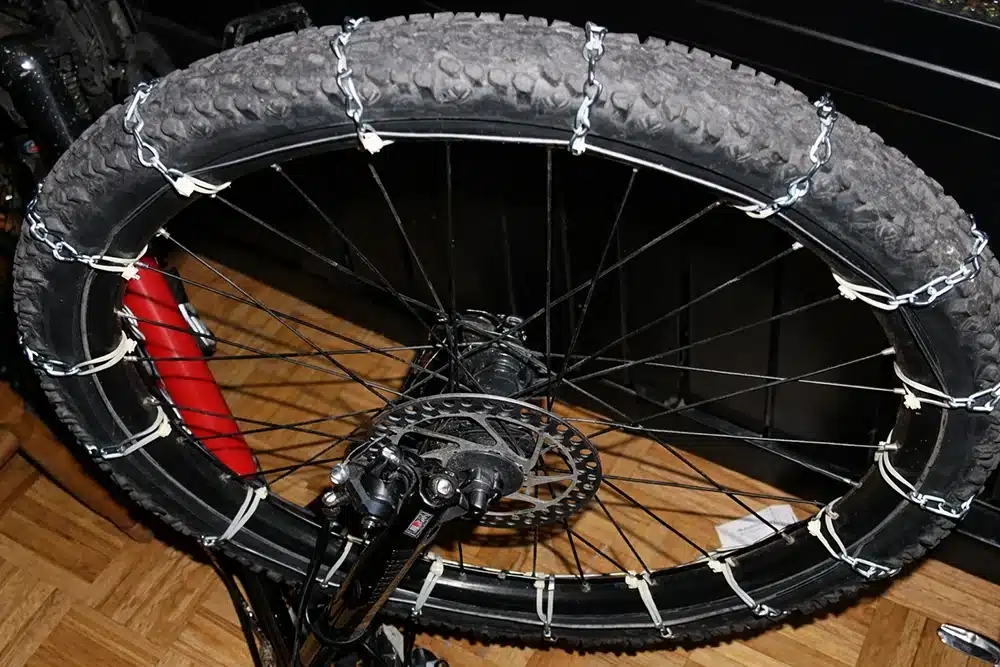
The idea is straightforward: wrap a short length of metal chain around the tire so the chain sits on the tread and acts as the “bite points” against the ground. Then use ties to fasten the two ends of the chain on the inside of the wheel, so the chain stays in place while riding. When the wheel rolls, the chain takes the contact and pressure. The ties mainly do the positioning and fastening, so they are less likely to be crushed directly by the tire.
Of course, this is still an emergency-style solution. It’s best for low speed and short distance, and should be removed once the road conditions improve. Using slightly wider, stronger cable ties helps, and trimming the tails flush is important too—so nothing catches on the frame or brake parts.
2) Using Cable Ties as “Plastic Wicker” for Woven Baskets
Some makers use cable ties directly as a weaving material. Because cable ties have a uniform width, controlled flexibility, and built-in locking heads, they’re surprisingly easy to work with. When a section needs to be fixed, you simply lock it in place—no glue, no knots.
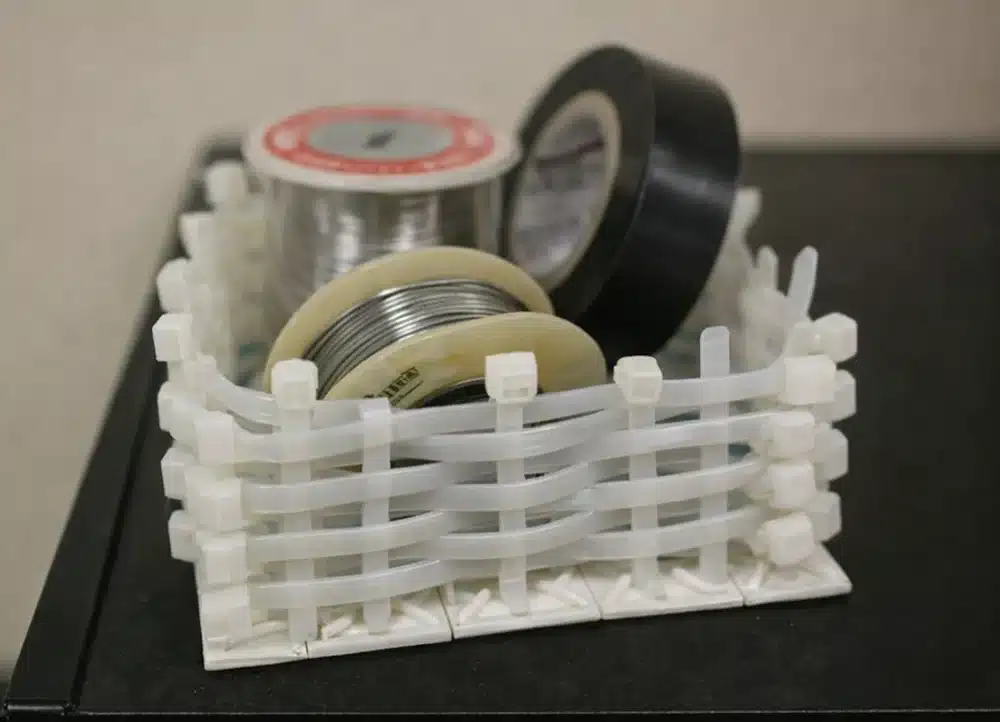
The finished baskets are water-resistant and easy to clean, which makes them suitable for small storage trays, pen holders, or key baskets. For easier bending and weaving, thinner sizes (such as 2.5 mm or 3.6 mm) are commonly used. If a firmer shape is needed, wider ties can be used as the frame, with thinner ones woven through as the outer layer. This combination gives a structure that’s both stable and comfortable to handle.
3) Turning a Helmet into a High-Visibility “Mohawk”
This idea is popular at events and parties. Makers thread brightly coloured cable ties through the ventilation holes of a helmet, lock them in place, and leave the tails sticking out. After trimming them to different lengths, the result is a bold “mohawk” row of spikes.
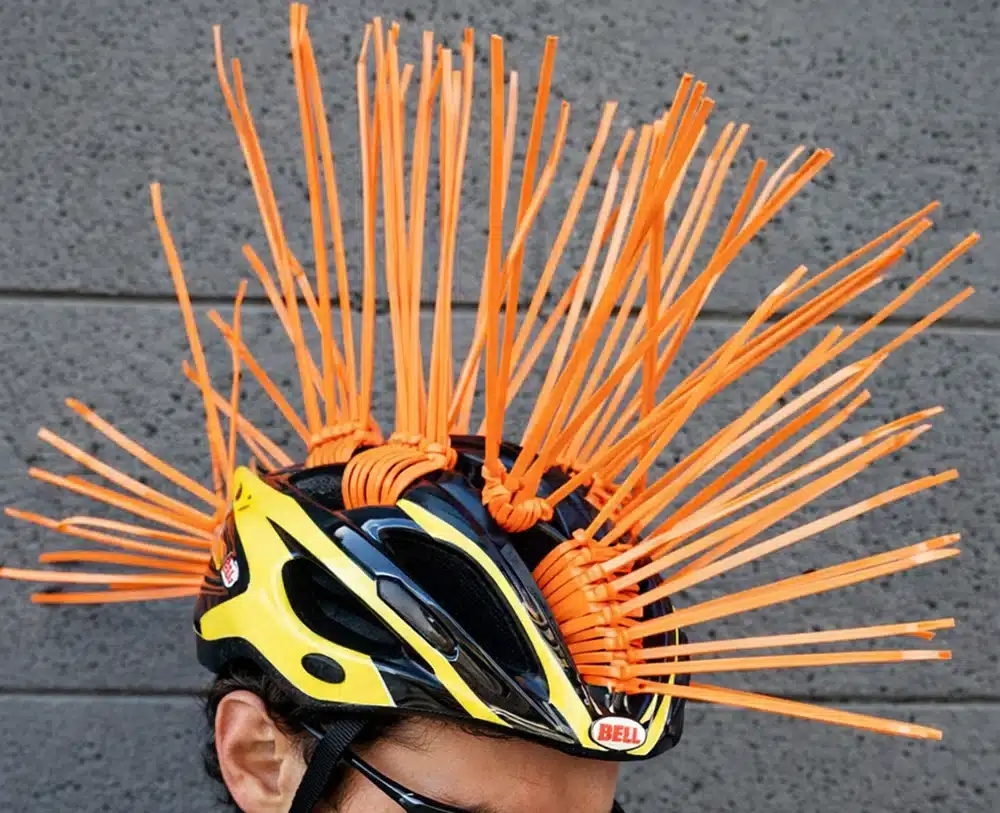
The key here isn’t complexity, but restraint. Cable ties that are too long will droop and ruin the effect. Short, evenly spaced ties keep the look clean and striking. Changing colours instantly changes the style, which is part of the fun.
4) Power Cables as a “Shoe Upper,” Held Together by Cable Ties
Some creative builds use old power cords or cable jackets to form the upper part of a shoe-shaped design. In these projects, cable ties act like stitching. The cables are laid out along the desired shape, then fixed section by section with cable ties to lock everything in place.
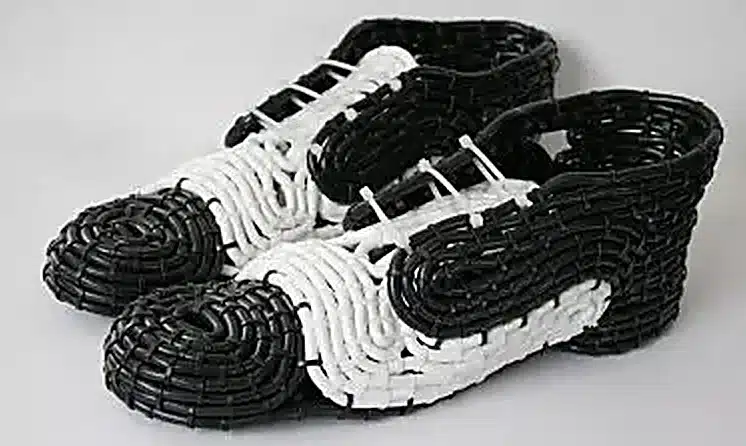
This kind of project is more about visual texture and layering than comfort or durability. Cable ties make it possible to experiment quickly—adjusting shapes, tightening sections, or reworking parts without committing to permanent fasteners.
5) Old Computer Parts Wreaths Made Easier with Cable Ties
Holiday wreaths made from old RAM sticks, keycaps, and cables are another place where cable ties shine. The parts are irregular, with no standard mounting points, but as long as a tie can loop around them, they can be fixed to a circular base.
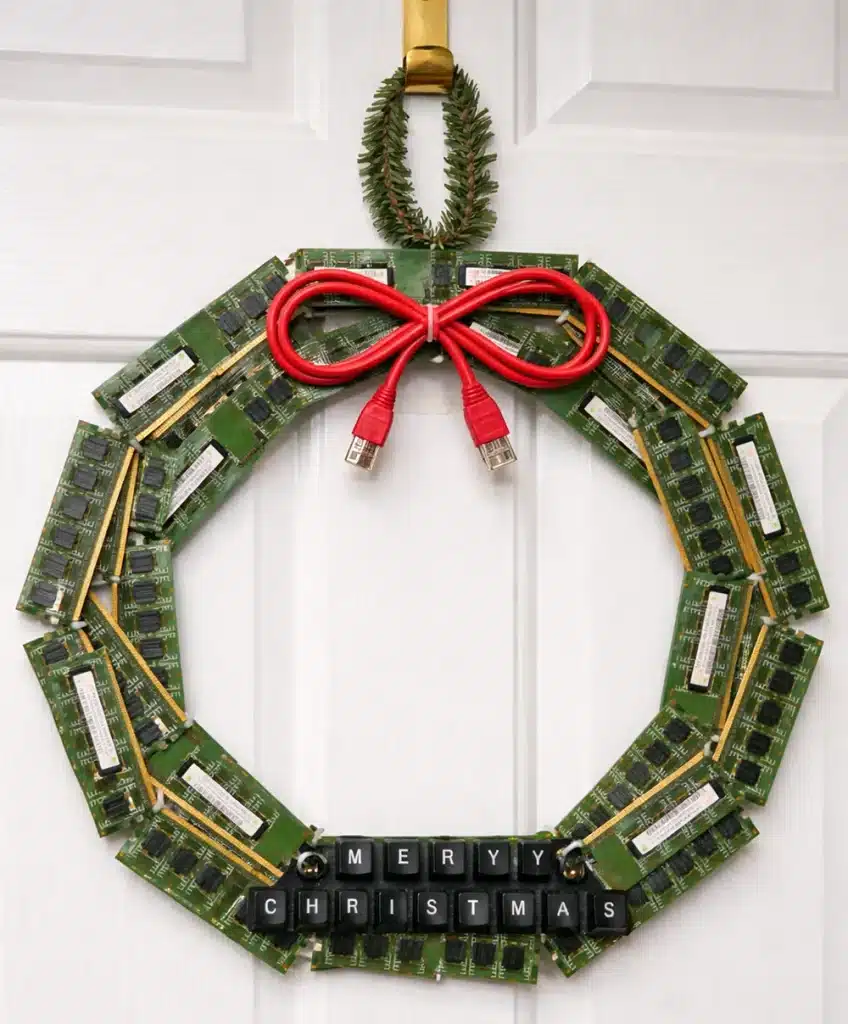
Makers often use small cable ties to “build” the wreath piece by piece, then add coloured wires or ribbons for decoration. Narrow ties (around 2.5 mm) are easier to hide, especially in black or clear. If the goal is to make the ties part of the visual design, bright colours work just as well.
6) A “Cable Tie Chair” with No Screws at All
In this project, wooden boards are cut into strips and drilled with holes. Cable ties are then used as the connectors, linking armrests, side panels, and the seat together like building blocks. Once tightened, the structure forms a chair that can be folded or taken apart easily.
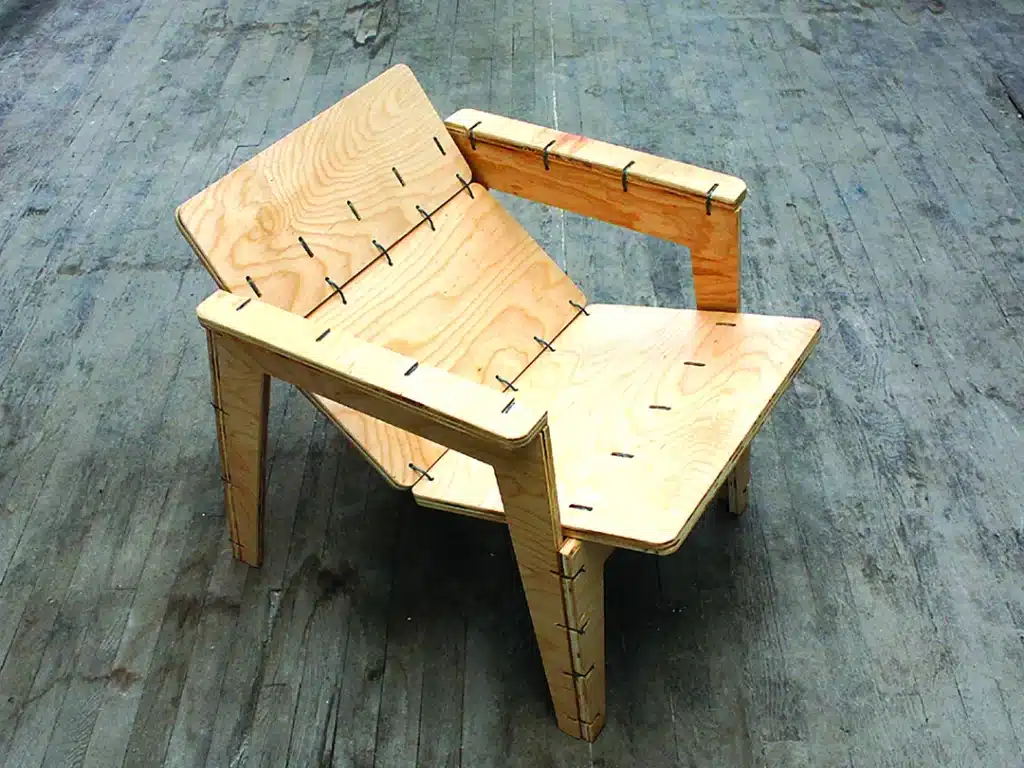
What makes this design appealing is that it avoids traditional hardware altogether—no hinges, no screws, no screwdriver. Cable ties handle most of the assembly work. Because the load is higher, these builds usually rely on wider, stronger cable ties, and sometimes two ties are used in parallel at the same joint to increase stability.
Conclusion
Many creative DIY projects aren’t about using advanced materials—they’re about lowering the barrier to building. Cable ties make it easy to fix, test, and adjust ideas quickly. With a simple thread-and-pull action, a concept can take shape in minutes.
That’s why cable ties often show up as a universal connector in these projects. They’re inexpensive, fast to use, and flexible enough to support experimentation—well beyond their original role of just bundling cables.